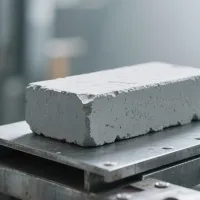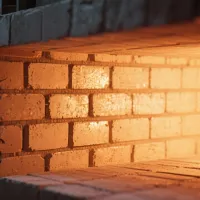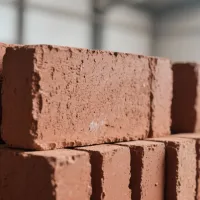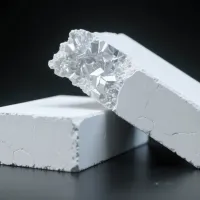
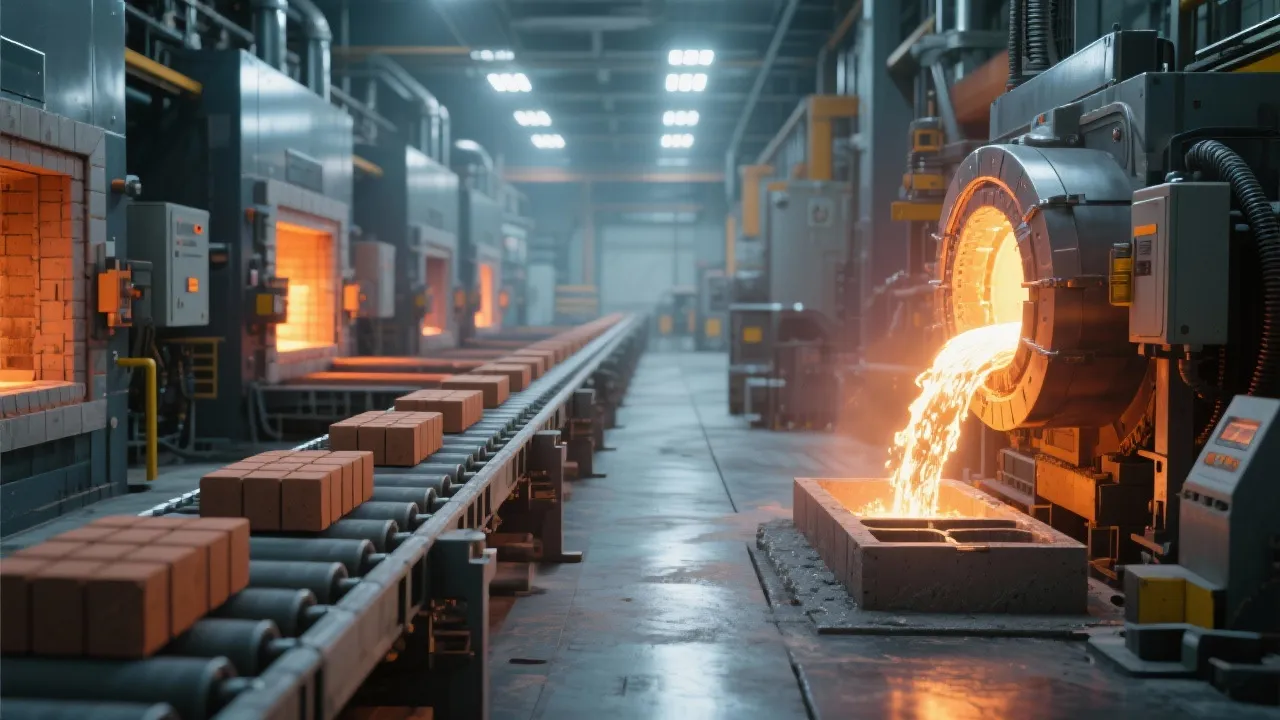
In high-temperature industrial furnaces like steel converters and cement rotary kilns, alkali slags present a persistent challenge, aggressively attacking refractory linings and compromising operational stability. Traditional magnesia-carbon bricks, although widely used, often fall short in resisting alkali metal oxide infiltration under such harsh conditions. 华耐高温’s magnesia-carbon bricks incorporate a carefully calibrated synergy of high-purity raw materials and specialized anti-oxidants to significantly enhance their alkali resistance, extending service life and reducing costly furnace downtime.
Alkali metal oxides formed during furnace operations aggressively infiltrate refractory bricks, inducing corrosion and structural degradation. This leads to premature lining failure, increased maintenance frequency, and unplanned outages. Conventional magnesia-carbon bricks with impurities in their raw materials exhibit lower resistance, as alkali metals exploit structural defects and micro-pores for rapid penetration.
华耐高温 employs a high-purity magnesia (MgO) matrix with purity levels exceeding 97%, drastically reducing reactive impurity phases that facilitate alkali ingress. Paired with naturally sourced flake graphite, this structure forms a robust, flexible skeleton with excellent thermal shock resistance and low permeability. The interplay improves the brick’s intrinsic ability to resist chemical attack and mechanical spalling within aggressive alkali slag environments.
One key breakthrough lies in integrating powdered anti-oxidants such as aluminum and silicon powders during the sintering process. These additives react at elevated temperatures to form a dense, adherent carbon layer within the brick’s microstructure. This carbon layer acts as an impermeable shield that inhibits alkali metal oxide diffusion into the refractory, effectively improving alkali resistance under prolonged high-temperature service.
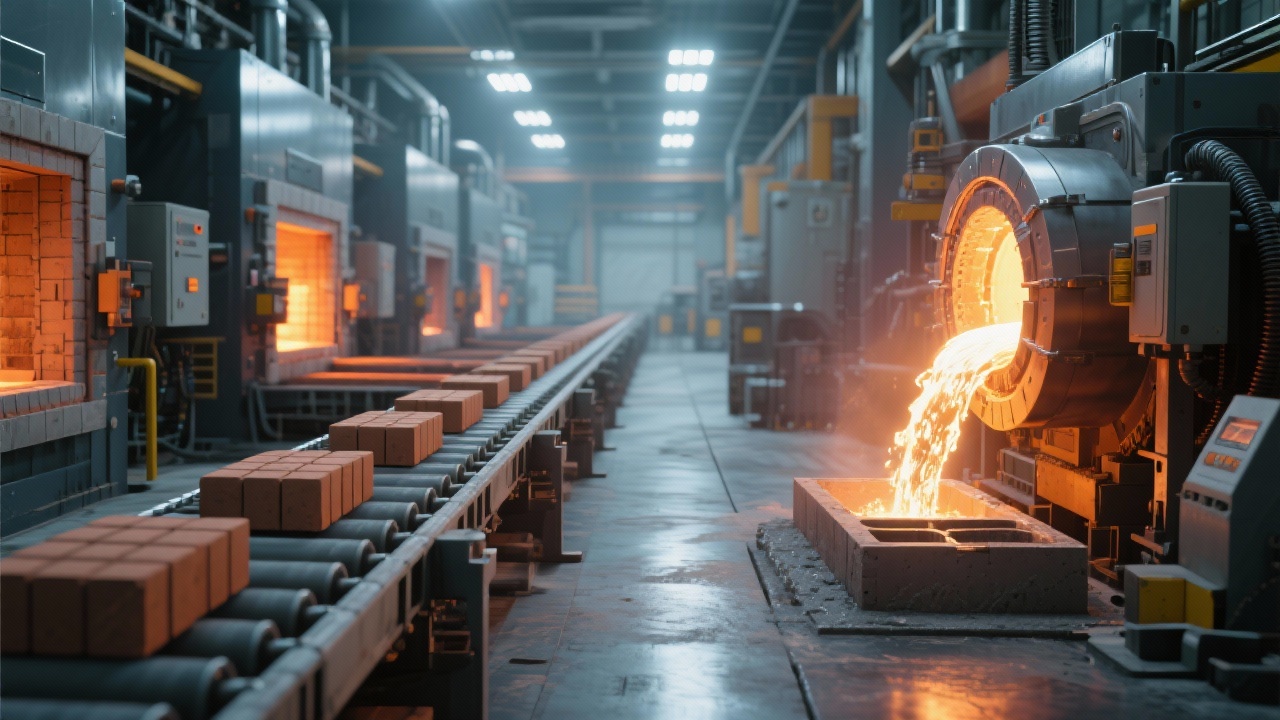
Comprehensive field tests in major steel plants and cement rotary kilns confirm the durability enhancement of 华耐高温 magnesia-carbon bricks. Data shows that furnace linings with this optimized composition sustain structural integrity over operating periods exceeding 12 months—up to 30% longer lifespan compared to standard bricks—while maintaining stable thermal conductivity and mechanical strength. This translates directly into less frequent relining cycles and reduced operational costs.
Under different furnace conditions, the protective carbon layer evolves dynamically. Its integrity depends on maintaining reducing atmospheres and controlling temperature gradients. 华耐高温 provides tailored operational guidelines for preserving this barrier, including oxygen partial pressure management and timely inspections, ensuring maximum longevity and alkali slag resistance during extended runs.
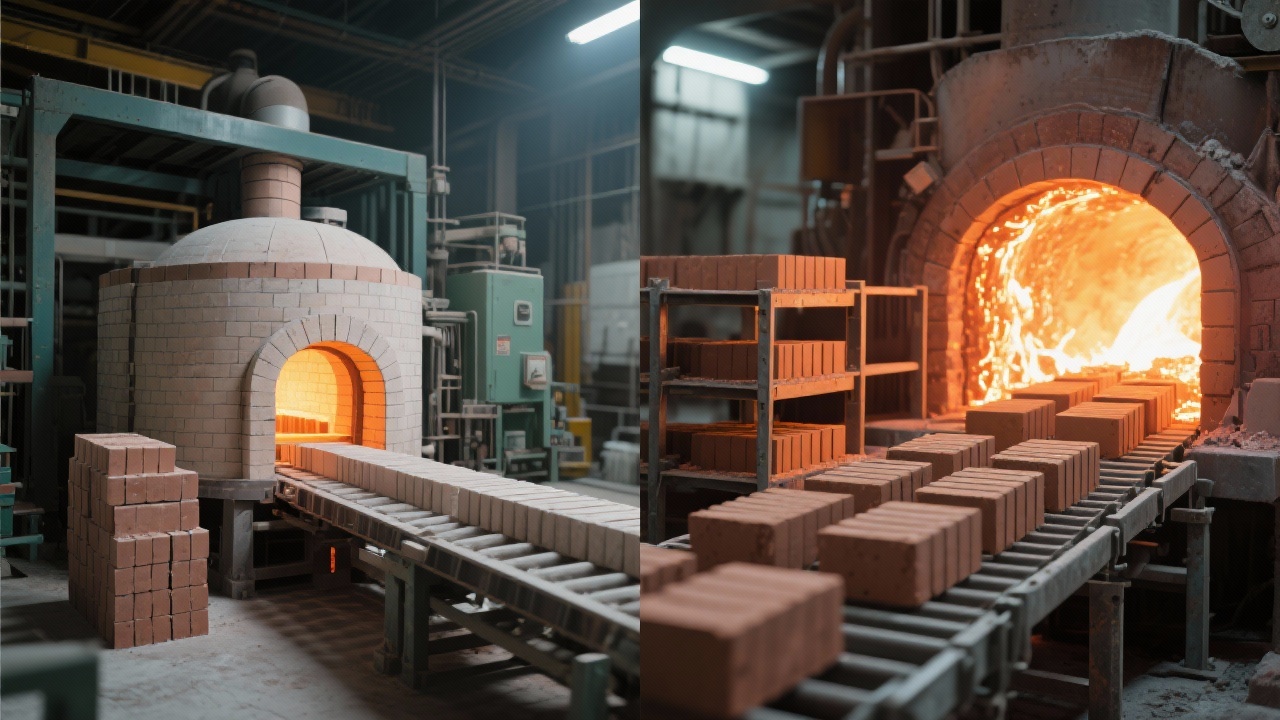
By adopting 华耐高温’s magnesia-carbon bricks formulated with high-purity raw materials and integrated anti-oxidants, users gain critical advantages:
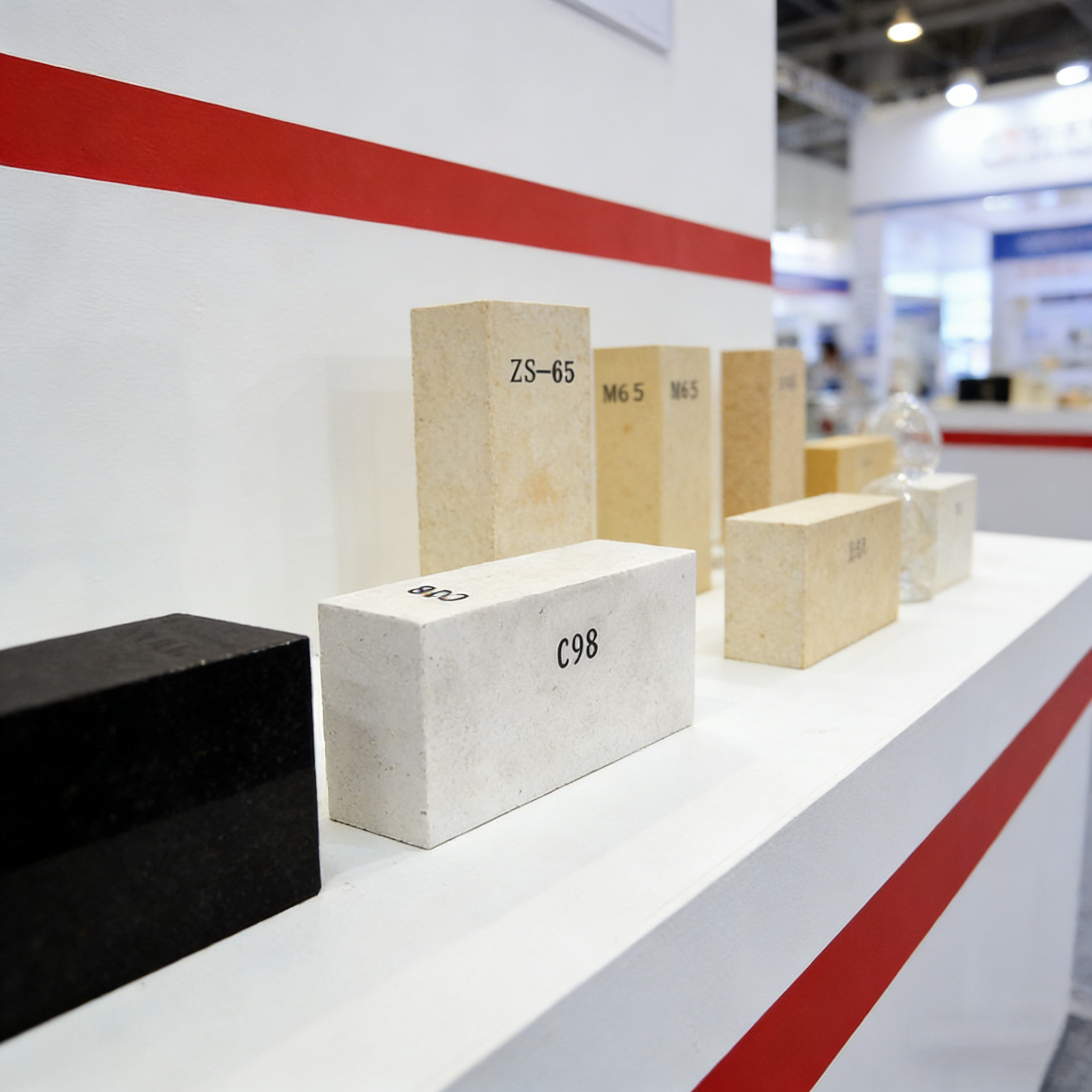
Q1: How does high-purity magnesia influence alkali resistance?
A1: Higher purity MgO reduces secondary impurity phases that are more prone to chemical attack, enhancing structural resilience against alkali slags.
Q2: Can these bricks be used in all types of high-temperature furnaces?
A2: They are optimized for steel converters, cement kilns, and similar environments where alkali slags are prevalent, but must be matched to specific thermal and chemical conditions.
Q3: What maintenance practices help sustain the carbon protective layer?
A3: Maintaining reducing atmospheres, monitoring temperature stability, and periodic inspections are key to preserving the carbon layer that blocks alkali penetration.
 404
|
404
|
 blast furnace refractory brick maintenance
low porosity refractory bricks
3 checks 2 controls
refractory brick service life extension
thermocouple overheating monitoring
blast furnace refractory brick maintenance
low porosity refractory bricks
3 checks 2 controls
refractory brick service life extension
thermocouple overheating monitoring
 378
|
Corundum refractory bricks
High alumina refractory materials
Metallurgy industry refractory bricks
Glass industry refractory bricks
Refractory brick selection
378
|
Corundum refractory bricks
High alumina refractory materials
Metallurgy industry refractory bricks
Glass industry refractory bricks
Refractory brick selection
 253
|
Magnesia-chrome refractory bricks
Converter lining selection
High-temperature converter refractories
Thermal shock resistance
Slag resistance of refractory bricks
253
|
Magnesia-chrome refractory bricks
Converter lining selection
High-temperature converter refractories
Thermal shock resistance
Slag resistance of refractory bricks
 248
|
industrial furnace refractory brick selection
low porosity refractory bricks
1580–1770°C refractory lining
high alumina refractory bricks
thermal shock and corrosion resistant refractories
248
|
industrial furnace refractory brick selection
low porosity refractory bricks
1580–1770°C refractory lining
high alumina refractory bricks
thermal shock and corrosion resistant refractories
 372
|
High alumina refractory clay bricks
High-temperature industrial furnace refractory bricks
Refractory brick installation technology
Furnace lining refractory materials
Refractory brick performance analysis
372
|
High alumina refractory clay bricks
High-temperature industrial furnace refractory bricks
Refractory brick installation technology
Furnace lining refractory materials
Refractory brick performance analysis