

If your furnace lining fails prematurely—leading to unplanned downtime, higher maintenance costs, and inconsistent product quality—you’re likely using standard high-alumina brick (<85% Al₂O₃). The real culprit? Not just temperature—it’s the chemistry of erosion.
Standard high-alumina bricks (typically 75–85% Al₂O₃) may seem cost-effective upfront, but they fail under acidic or basic slags common in steelmaking, glass melting, and non-ferrous smelting. Their low alumina content means poor resistance to chemical attack—resulting in:
This isn’t theory—it’s what we see in field reports from mills across Europe and Southeast Asia. One client reported replacing their furnace lining every 6 months with standard bricks; after switching to 90%+ alumina refractory, it lasted over 2 years—with no significant degradation.
It’s not just about purity—it’s structure. High-purity fused or sintered alumina bricks have a dominant corundum (Al₂O₃) phase (>90%), which delivers measurable performance gains:
| Property | High-Alumina Brick (75–85%) | Alumina-90+ Brick |
|---|---|---|
| Cold Crushing Strength | ~120 MPa | ~160 MPa (+33%) |
| Refractoriness Under Load (RUL) | ~1450°C | ~1700°C+ |
| Thermal Shock Resistance | Moderate | Excellent (low porosity + strong grain bonds) |
These aren't marginal improvements—they're game-changers for continuous operation. In one case study from a copper smelter in Chile, switching from traditional bricks to fused alumina bricks reduced furnace downtime by 55%, saving an estimated $280K/year in labor, energy, and lost production.
Fused alumina bricks (made via electric arc melting) offer superior homogeneity and fewer microcracks than sintered ones—but both outperform standard bricks significantly. For critical zones like tuyeres or hearths, fused alumina is the preferred choice. For less aggressive areas, sintered alumina offers excellent value with 90–95% Al₂O₃ purity.
Bottom line: When you invest in >90% alumina bricks, you're not paying more—you're reducing total cost of ownership. Less replacement = less waste = lower CO₂ footprint per ton of metal produced.
Get a free technical consultation on selecting the right alumina-based refractory for your specific application—from blast furnaces to glass tanks.
Download Our Free Selection Guide →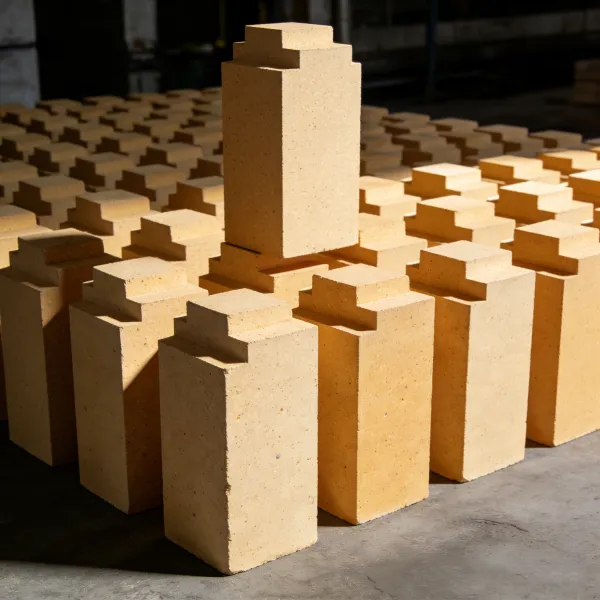
 295
|
295
|
 high-alumina refractory bricks
glass furnace refractories
refractory brick wear resistance testing
corrosion resistant refractory bricks
industrial furnace lining solutions
high-alumina refractory bricks
glass furnace refractories
refractory brick wear resistance testing
corrosion resistant refractory bricks
industrial furnace lining solutions
 119
|
converter lining selection
magnesia chrome brick performance
refractory brick slag resistance
high temperature converter refractories
magnesia chrome brick application
119
|
converter lining selection
magnesia chrome brick performance
refractory brick slag resistance
high temperature converter refractories
magnesia chrome brick application
 242
|
corundum refractory bricks
high temperature corrosion resistant materials
alumina refractory bricks
refractory brick manufacturing process
refractory brick applications
492
|
Corundum refractory bricks
High-temperature refractory materials
Acid and alkali corrosion resistance
Refractory brick selection guide
Corundum brick applications
242
|
corundum refractory bricks
high temperature corrosion resistant materials
alumina refractory bricks
refractory brick manufacturing process
refractory brick applications
492
|
Corundum refractory bricks
High-temperature refractory materials
Acid and alkali corrosion resistance
Refractory brick selection guide
Corundum brick applications


