

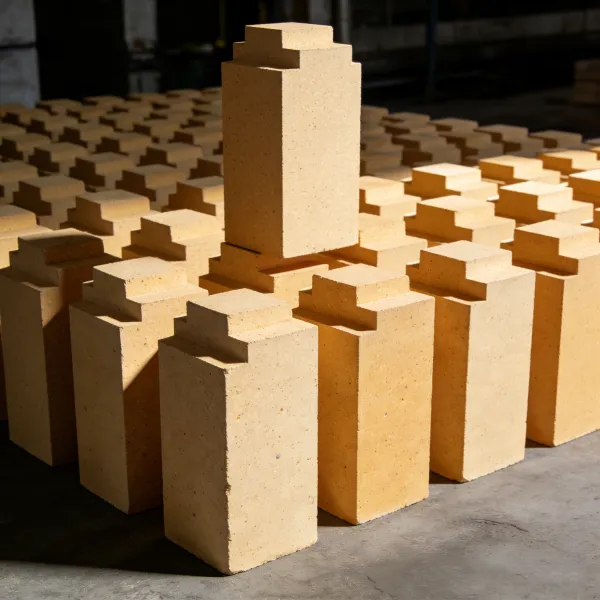
Corundum refractory bricks have emerged as the top choice for international high - end industrial furnaces. But what makes them so special? Let's take a closer look at their core performance indicators.
The first and most prominent feature of corundum refractory bricks is their high alumina content. With an alumina content of over 90% (≥90% Al₂O₃), these bricks possess excellent refractory properties. They can withstand temperatures above 1700℃, making them suitable for extremely high - temperature environments.
In addition to high alumina content, corundum refractory bricks also have high cold - crushing strength. This means they can maintain their structural integrity under heavy loads, even in high - temperature conditions. Their outstanding wear - resistance is another key advantage. In industrial furnaces where materials are constantly moving and rubbing against the bricks, the wear - resistance of corundum refractory bricks ensures a long service life.
There are two main manufacturing processes for corundum refractory bricks: sintering and melting. These two processes have different effects on the crystal phase structure and thermal stability of the bricks.
The sintering process involves heating the raw materials to a high temperature and then cooling them slowly. This process results in a more porous structure, which gives the bricks better thermal insulation properties. On the other hand, the melting process involves melting the raw materials at an extremely high temperature and then rapidly cooling them. The bricks produced by the melting process have a denser structure and better wear - resistance. An information chart (as shown in the comparison diagram) can clearly illustrate the differences between these two processes.
In the glass industry, glass melting furnaces often face the problem of erosion. The high alumina content and excellent wear - resistance of corundum refractory bricks can effectively resist the erosion of glass melt, reducing the frequency of furnace lining replacement and extending the service life of the furnace by up to 2 times. In the steel industry, short - lived furnace linings are a common headache. Corundum refractory bricks can withstand the high - temperature and corrosive environment in steel furnaces, effectively reducing the downtime of the equipment and cutting the downtime cost by more than 30%.
In a certain metallurgical plant, after replacing the original refractory bricks with corundum refractory bricks, the service life of the furnace lining increased from 6 months to 12 months. In a glass factory, the use of corundum refractory bricks reduced the maintenance times of the glass melting furnace from 4 times a year to 1 time a year. These actual cases and data strongly prove the excellent performance of corundum refractory bricks.
When selecting corundum refractory bricks, factors such as the operating temperature, load, and corrosive environment of the industrial furnace need to be considered. For high - temperature and high - wear environments, melting - process bricks are recommended; for environments that require better thermal insulation, sintering - process bricks are a better choice.
In the long run, although the initial investment in corundum refractory bricks may be relatively high, their long service life, reduced downtime, and extended equipment life can bring significant long - term economic benefits.
If you want to learn more about the technical white paper or customized solutions of corundum refractory bricks, please click here.
 295
|
295
|
 high-alumina refractory bricks
glass furnace refractories
refractory brick wear resistance testing
corrosion resistant refractory bricks
industrial furnace lining solutions
high-alumina refractory bricks
glass furnace refractories
refractory brick wear resistance testing
corrosion resistant refractory bricks
industrial furnace lining solutions
 119
|
converter lining selection
magnesia chrome brick performance
refractory brick slag resistance
high temperature converter refractories
magnesia chrome brick application
119
|
converter lining selection
magnesia chrome brick performance
refractory brick slag resistance
high temperature converter refractories
magnesia chrome brick application
 179
|
Corundum refractory bricks
Sintered corundum bricks
Fused corundum bricks
High - temperature refractory materials
Refractory brick selection
188
|
corundum refractory brick
high alumina refractory
fused vs sintered refractory
wear resistant refractory
ceramic industry refractory
117
|
alumina refractory bricks
high-temperature refractory materials
sintered refractory bricks
fused refractory bricks
high alumina bricks
179
|
Corundum refractory bricks
Sintered corundum bricks
Fused corundum bricks
High - temperature refractory materials
Refractory brick selection
188
|
corundum refractory brick
high alumina refractory
fused vs sintered refractory
wear resistant refractory
ceramic industry refractory
117
|
alumina refractory bricks
high-temperature refractory materials
sintered refractory bricks
fused refractory bricks
high alumina bricks


