
In the demanding environment of glass manufacturing, furnace linings face relentless assault from high temperatures exceeding 1600°C, corrosive molten materials, and mechanical abrasion. The performance of refractory materials directly impacts production efficiency, maintenance costs, and overall operational safety. This analysis examines the critical performance metrics of high-alumina refractory bricks specifically engineered for glass furnace applications, supported by empirical testing data and real-world application results.
"Our glass production line has achieved a 32% extension in maintenance cycles after upgrading to high-alumina refractory bricks, significantly reducing unplanned downtime and production losses." — Chief Engineer, European Glass Manufacturer
High-alumina refractory bricks (with Al₂O₃ content ranging from 65% to 90%) offer superior performance compared to conventional fireclay bricks in glass furnace environments. The optimized material composition delivers exceptional thermal stability and chemical resistance, critical factors in molten glass contact zones.
Advanced manufacturing processes, including controlled spherical pore formation and precision mechanical cutting, result in bricks with:
This combination ensures tight furnace lining installation with minimal joint gaps, reducing heat loss by up to 15% compared to standard refractory installations and preventing molten glass penetration into lining structures.
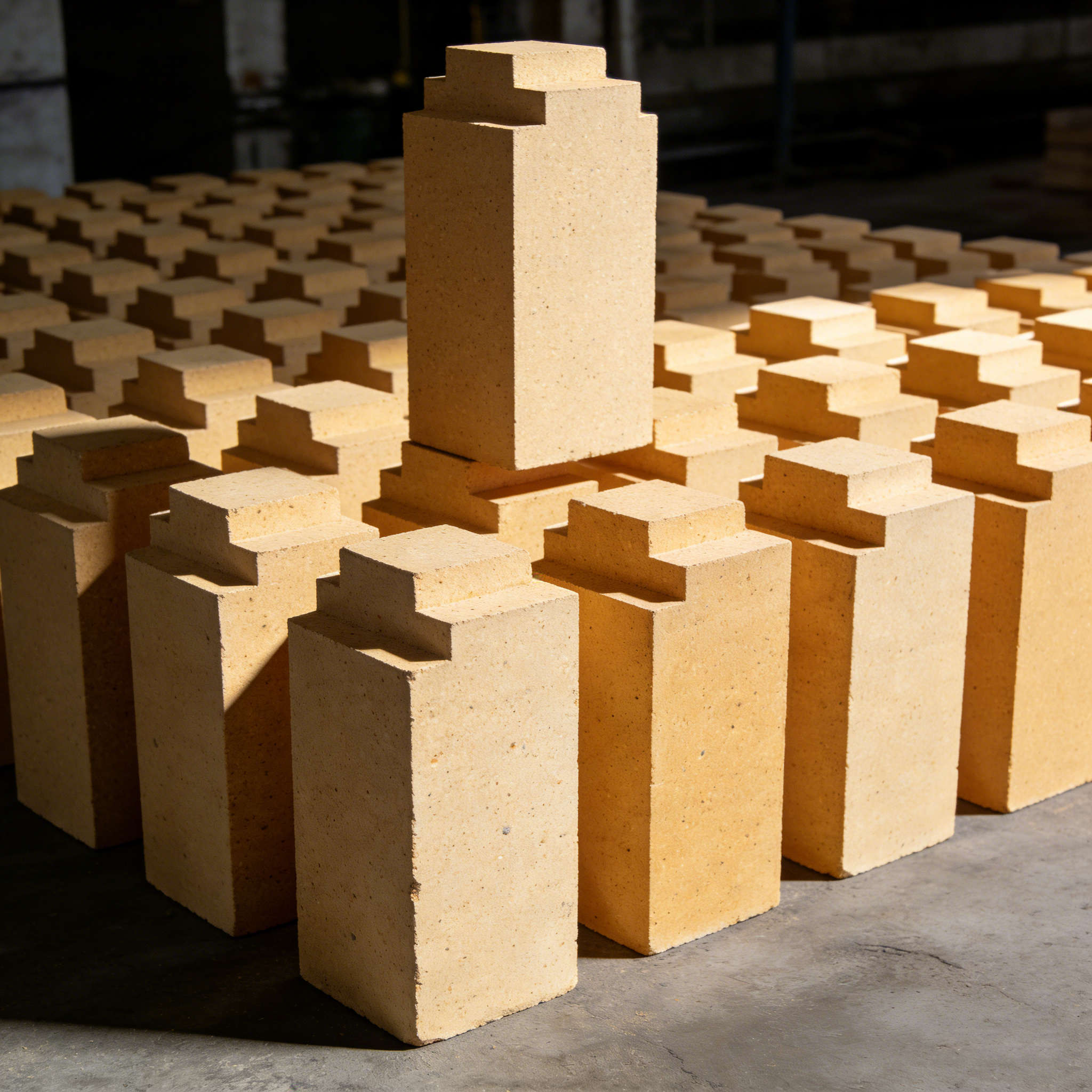
Independent laboratory testing under simulated glass furnace conditions reveals the superior durability of high-alumina refractory bricks. The following performance data was recorded during 500-hour testing cycles:
[Wear Rate Comparison Chart: High-Alumina vs. Fireclay vs. Silica Refractories]
Test conditions: 1550°C, abrasive glass batch material, continuous rotation test apparatus
Chemical attack from molten glass and volatile furnace components represents one of the most significant failure mechanisms for refractory linings. High-alumina bricks demonstrate exceptional resistance to both acidic and basic glass compositions through several mechanisms:
Exposure testing in soda-lime glass environments at 1580°C for 1000 hours showed minimal corrosion penetration depth of less than 3mm, compared to 8-12mm for standard fireclay bricks under identical conditions.
Real-world applications confirm the laboratory testing results. In a 500-ton/day float glass furnace, high-alumina refractory bricks installed in the crown and sidewalls demonstrated:
When specifying refractory bricks for glass furnace applications, engineers should consider:
Proper material selection can extend furnace campaign life by 2-3 years, significantly impacting overall production costs and return on investment.
Get personalized recommendations for your specific furnace design and glass production requirements.
Request Your Custom Furnace Lining SolutionOur refractory specialists provide technical assessments and material selection guidance at no initial cost.
By implementing high-alumina refractory solutions with proven performance characteristics, glass manufacturers can achieve significant operational improvements, reduced downtime, and enhanced product quality. The combination of advanced material science, precision manufacturing, and application engineering expertise delivers measurable benefits throughout the furnace lifecycle.

 242
|
242
|
 corundum refractory bricks
high temperature corrosion resistant materials
alumina refractory bricks
refractory brick manufacturing process
refractory brick applications
corundum refractory bricks
high temperature corrosion resistant materials
alumina refractory bricks
refractory brick manufacturing process
refractory brick applications
 119
|
converter lining selection
magnesia chrome brick performance
refractory brick slag resistance
high temperature converter refractories
magnesia chrome brick application
119
|
converter lining selection
magnesia chrome brick performance
refractory brick slag resistance
high temperature converter refractories
magnesia chrome brick application


