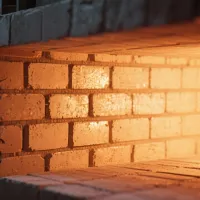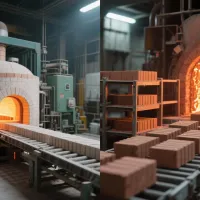
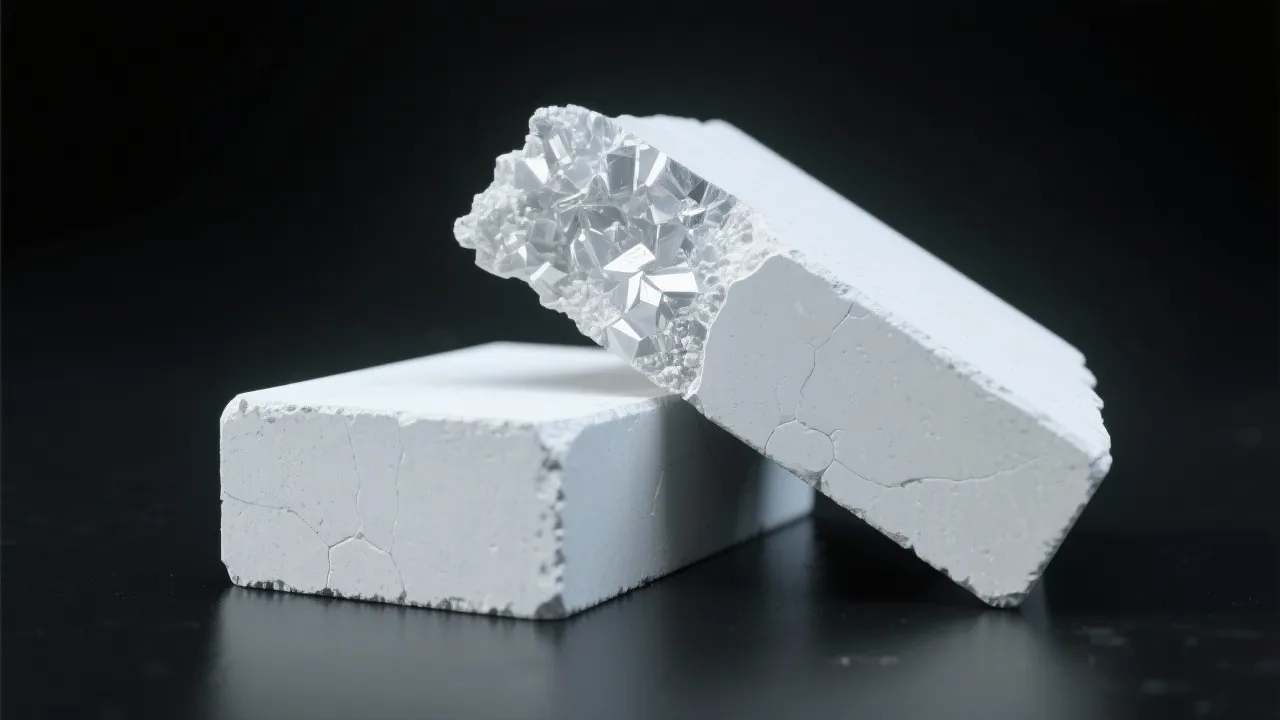
High - alumina refractory clay bricks have long been a cornerstone in the lining of hot - blast stoves and other high - temperature industrial furnaces. In this article, we will delve deep into the material composition, key processes, and performance characteristics of these bricks, and present real - world case studies to demonstrate their reliability.
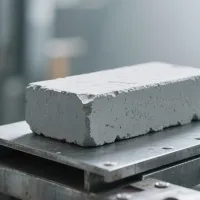
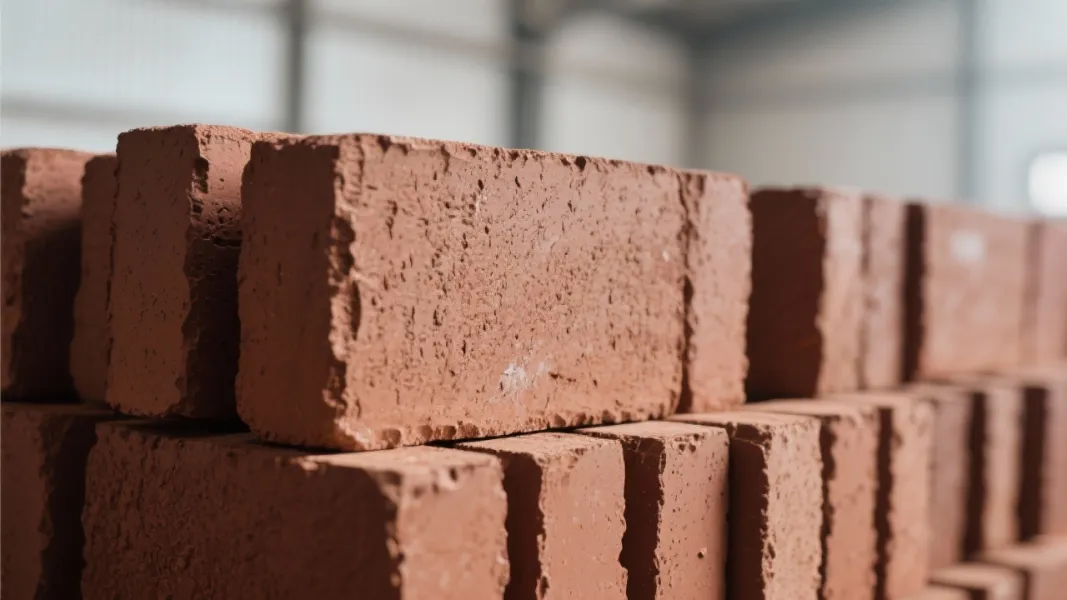
The raw materials of high - alumina refractory clay bricks mainly consist of high - alumina bauxite and other additives. The unique spherical pore structure is a key feature. This structure is formed through a special manufacturing process, which allows the bricks to have a high density. With a density of up to 2.8 g/cm³, these bricks can ensure a stable installation in the furnace lining. Additionally, the mechanical cutting process guarantees high dimensional accuracy, with a dimensional tolerance of less than ±0.5 mm, which is crucial for the seamless installation of the bricks in the lining system.
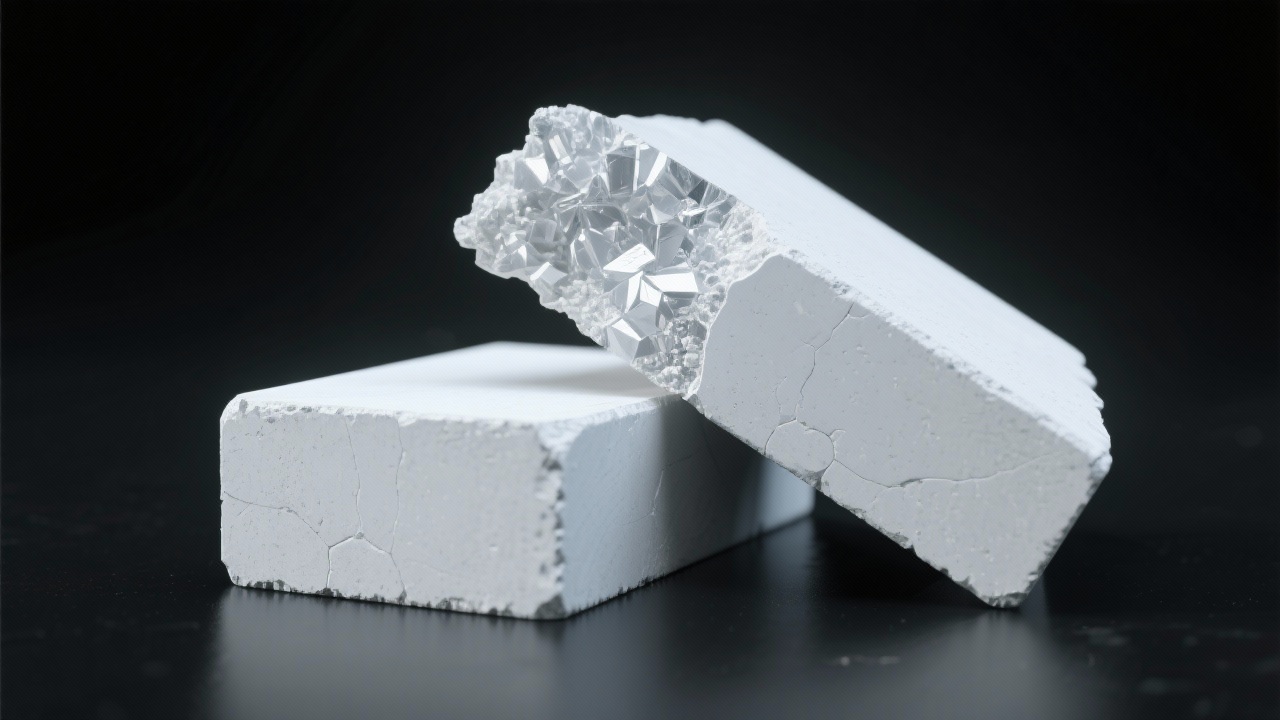
These refractory bricks have a low thermal conductivity, typically around 1.2 W/(m·K) at 1000°C. This low thermal conductivity helps to reduce heat loss from the furnace, thereby improving the energy efficiency of the furnace. The high wear - resistance is another significant advantage. In high - temperature environments where there is a lot of abrasion, such as in hot - blast stoves, the wear rate of these bricks is less than 5% after 1000 hours of continuous operation, which is far lower than that of ordinary refractory materials.
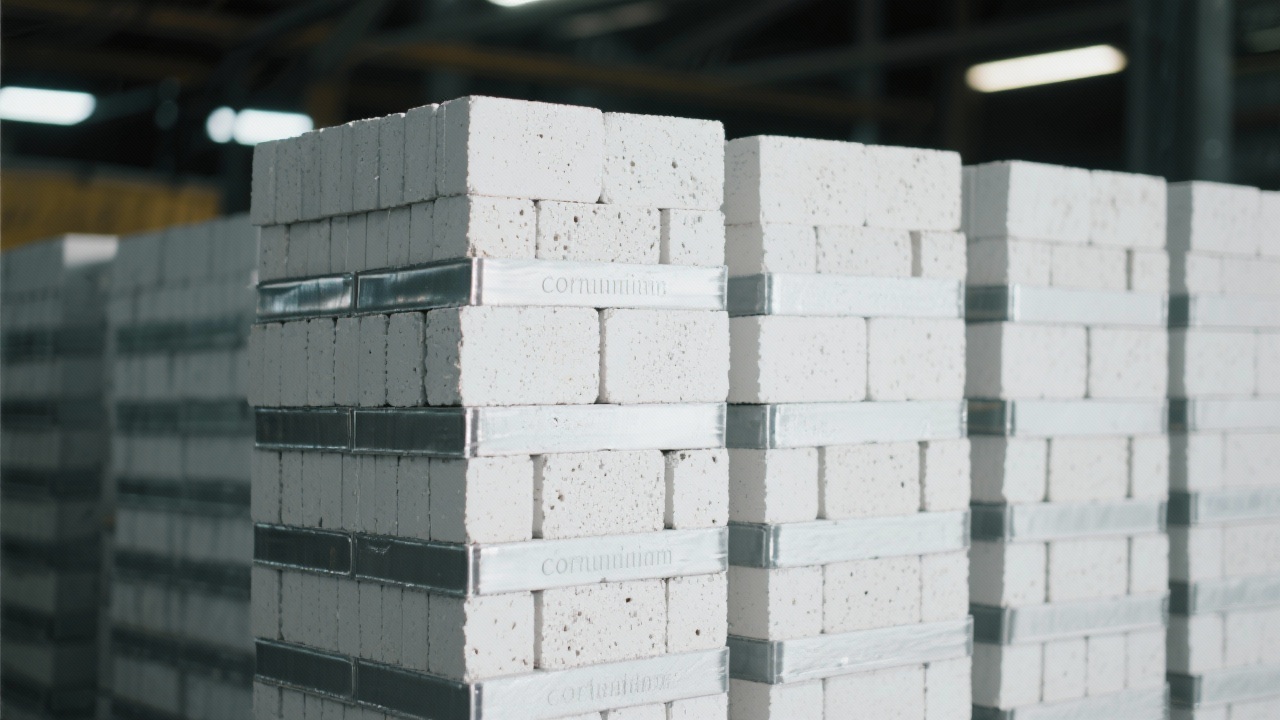
They also exhibit excellent corrosion resistance and anti - heat - shock performance. The corrosion rate in a corrosive gas environment is less than 1% per year. And they can withstand more than 500 thermal cycles without significant damage, which greatly extends the service life of the furnace lining. By improving the service life and operation efficiency of the furnace lining, these bricks can save a lot of maintenance costs and downtime for industrial enterprises.
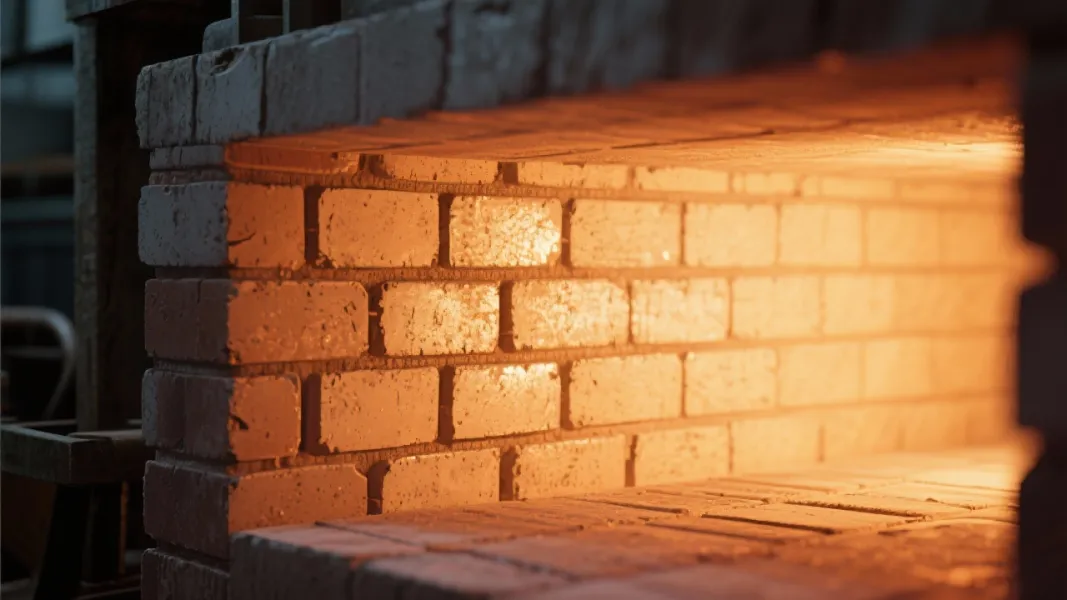
In a steel plant, the hot - blast stove lining was replaced with high - alumina refractory clay bricks. Before the replacement, the lining needed to be repaired every 2 years due to wear and heat - shock damage. After using these bricks, the service life of the lining was extended to more than 5 years, and the energy consumption of the hot - blast stove was reduced by 15%. In a glass melting furnace, the application of these bricks also improved the production efficiency by 10% and reduced the maintenance frequency by 30%.
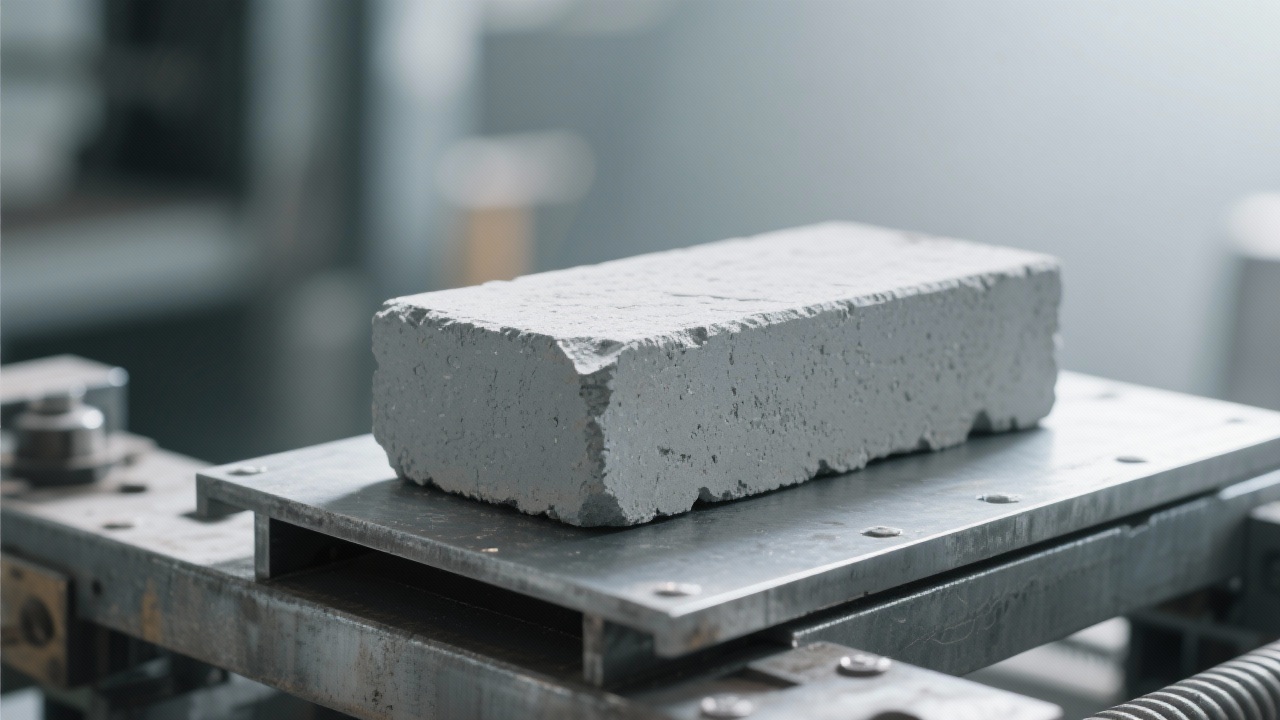
During the installation process, some common problems may occur, such as uneven joints and insufficient bonding. We provide detailed installation instructions and solutions. For example, we recommend using a special refractory mortar with a bonding strength of more than 1 MPa to ensure a firm connection between the bricks. In terms of maintenance, regular inspections and timely replacement of damaged bricks can further ensure the long - term stable operation of the furnace lining.
High - alumina refractory clay bricks offer a comprehensive solution for industrial furnace linings. Their excellent performance in heat - shock resistance, wear - resistance, and other aspects has been verified by numerous real - world cases. If you are looking for high - quality refractory materials for your industrial furnaces, our high - alumina refractory clay bricks are the ideal choice. Contact us now to get customized refractory materials and professional technical support!

 402
|
402
|
 alumina refractory bricks
glass melting furnace lining
high temperature耐火材料
fused alumina brick
sintered alumina brick
alumina refractory bricks
glass melting furnace lining
high temperature耐火材料
fused alumina brick
sintered alumina brick
 326
|
Corundum refractory bricks
High alumina content
Wear resistance
Refractoriness of 1700°C
Metallurgical furnace refractory materials
451
|
high alumina fire clay brick
industrial furnace lining
thermal shock resistance
custom refractory brick
low thermal conductivity refractory
326
|
Corundum refractory bricks
High alumina content
Wear resistance
Refractoriness of 1700°C
Metallurgical furnace refractory materials
451
|
high alumina fire clay brick
industrial furnace lining
thermal shock resistance
custom refractory brick
low thermal conductivity refractory
 389
|
high alumina fireclay brick
mechanical cutting process
spherical pore structure
industrial furnace refractory
refractory brick manufacturing
389
|
high alumina fireclay brick
mechanical cutting process
spherical pore structure
industrial furnace refractory
refractory brick manufacturing
 278
|
Corundum refractory bricks
High alumina refractory materials
High temperature and corrosion resistant refractory bricks
Sintering and melting processes
Refractory brick application cases
278
|
Corundum refractory bricks
High alumina refractory materials
High temperature and corrosion resistant refractory bricks
Sintering and melting processes
Refractory brick application cases