

In high-temperature and corrosive environments, the selection of refractory bricks is crucial for the lifespan and operational efficiency of kilns. You might be facing the headache of high costs and production halt risks due to frequent replacement of refractory bricks. Let's explore how corundum refractory bricks can be the solution to your problems.
In high-temperature industrial settings, the constant need to replace refractory bricks not only incurs significant costs but also poses a risk of production downtime. According to industry statistics, companies may experience up to 30% of their annual production costs just on replacing refractory materials. Moreover, each replacement can lead to a production halt of several days, resulting in substantial economic losses.
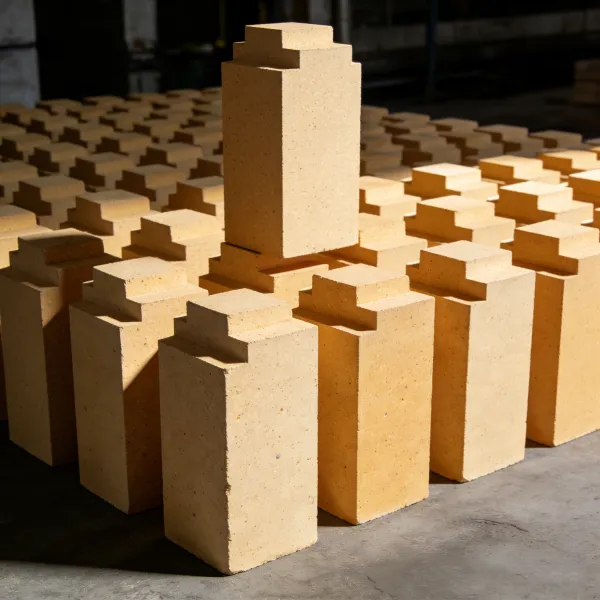
Corundum bricks owe their excellent anti-corrosion ability to their unique crystal structure and high-purity raw materials. With an alumina content of over 90%, these bricks have a cold crushing strength that far exceeds ordinary refractory bricks. Their wear resistance is also remarkable, and they can withstand temperatures of over 1700°C. The corundum crystal phase structure provides a stable framework, effectively resisting the erosion of acid and alkaline slag.
There are two main production processes for corundum bricks: sintering and fusion. Sintered corundum bricks are made by high-temperature sintering of raw materials, which gives them good thermal shock resistance and is suitable for environments with frequent temperature changes. Fused corundum bricks, on the other hand, are produced by melting raw materials at extremely high temperatures and then casting them. They have a more compact structure and higher corrosion resistance, making them ideal for highly corrosive environments. A comparison chart here can clearly show the performance differences between the two types of bricks:
| Process | Thermal Shock Resistance | Corrosion Resistance | Suitable Working Conditions |
|---|---|---|---|
| Sintered | Good | Moderate | Frequent temperature changes |
| Fused | Moderate | High | Highly corrosive environments |
In the metallurgical industry, corundum bricks have been widely used in blast furnaces, converters, and other equipment. They can effectively resist the erosion of slag and hot metal, reducing the frequency of equipment maintenance and increasing the service life of the equipment by more than 2 times. In the glass industry, corundum bricks are used in glass melting furnaces, where they can withstand the high - temperature and alkaline environment, reducing the downtime of the furnace by more than 30%.
"Since we switched to corundum refractory bricks in our glass melting furnace, we have seen a significant reduction in maintenance costs and an increase in production efficiency." - A glass manufacturing company
When selecting corundum bricks, you need to consider factors such as temperature, type of corrosion, and load strength. For high - temperature and highly corrosive environments, fused corundum bricks are recommended. In environments with frequent temperature changes, sintered corundum bricks are a better choice. By making the right selection, you can not only reduce costs but also improve the stability of production.
Ready to enhance your production efficiency and reduce costs with high - quality corundum refractory bricks? Click here to learn more
 295
|
295
|
 high-alumina refractory bricks
glass furnace refractories
refractory brick wear resistance testing
corrosion resistant refractory bricks
industrial furnace lining solutions
high-alumina refractory bricks
glass furnace refractories
refractory brick wear resistance testing
corrosion resistant refractory bricks
industrial furnace lining solutions
 119
|
converter lining selection
magnesia chrome brick performance
refractory brick slag resistance
high temperature converter refractories
magnesia chrome brick application
119
|
converter lining selection
magnesia chrome brick performance
refractory brick slag resistance
high temperature converter refractories
magnesia chrome brick application
 242
|
corundum refractory bricks
high temperature corrosion resistant materials
alumina refractory bricks
refractory brick manufacturing process
refractory brick applications
242
|
corundum refractory bricks
high temperature corrosion resistant materials
alumina refractory bricks
refractory brick manufacturing process
refractory brick applications


