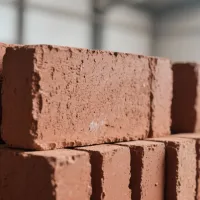
Low Porosity Refractory Brick Selection for Industrial Furnaces (1580–1770°C)
2026-02-25
Tutorial Guide
Selecting the right refractory brick for an industrial furnace directly affects lining life, energy efficiency, and operational safety—especially in the 1580–1770°C range where thermal load, chemical attack, and cycling stress intensify. This guide explains why low porosity refractories are often preferred in high-temperature zones, linking microstructure to performance in thermal stability, thermal shock resistance, and slag/alkali corrosion behavior. It provides a practical, data-driven selection logic based on service temperature, atmosphere (oxidizing/reducing), and operating cycle frequency, supported by typical property targets such as alumina content, apparent porosity, bulk density, and hot strength indicators. Real-world application scenarios from steel, glass, and ceramics illustrate how matching material parameters to conditions can reduce unplanned downtime and extend campaign life, while common selection misconceptions are clarified to prevent premature failure. For tailored recommendations aligned with your furnace profile, consult our technical team for a dedicated selection plan.
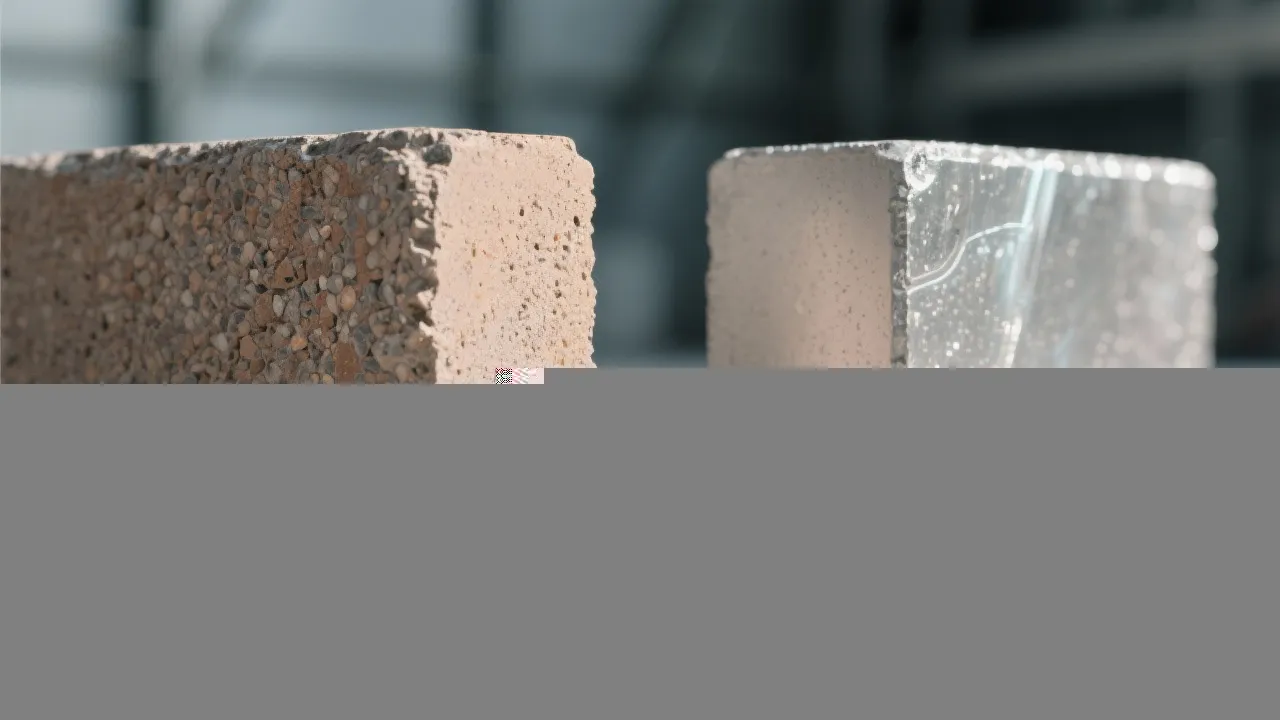
Choosing Low-Porosity Refractory Bricks for Industrial Furnaces (1580°C–1770°C): A Practical, Data-Led Guide
In the 1580°C–1770°C working window, refractory brick selection is rarely “about the highest temperature rating.” It is about controlling gas penetration, slag/alkali attack, and thermo-mechanical fatigue over thousands of heating cycles. Low-porosity refractories often outperform higher-porosity alternatives because they reduce reaction pathways inside the brick body—where most premature failures quietly begin.
1) Why “Low Porosity” Matters More Than It Sounds
Porosity is not just a lab number; it is a proxy for how easily hot gases, alkalis, slags, and dust-borne chemicals migrate into the refractory, react with it, and weaken the structure. In high-temperature zones, internal reactions often become the hidden driver of spalling and accelerated wear.
Typical reference ranges (industry common)
- Apparent porosity: ~12–16% (low-porosity dense bricks) vs. ~18–24% (standard dense bricks)
- Bulk density: ~2.30–2.65 g/cm³ depending on chemistry and firing
- Cold crushing strength (CCS): often ~60–120 MPa for dense, well-sintered grades
What low porosity improves in practice
- Slag resistance: fewer open channels → slower infiltration
- Corrosion resistance: reduced internal reaction surface area
- Thermal cycling durability: fewer weak points for crack initiation
- Energy performance: stable lining thickness, fewer hot spots, more consistent heat profile
For SEO-minded readers comparing options: when searching terms like industrial furnace refractory brick selection or low porosity refractory brick, the missing detail is often that porosity interacts strongly with the furnace’s atmosphere and operating rhythm. A good brick on paper can underperform badly in a “dirty,” alkali-rich, or frequently cycled furnace.

2) Mapping 1580°C–1770°C to Material Families (Without Over-Simplifying)
The 1580°C–1770°C range typically spans critical zones (transition, burning, throat, hot face) across steel, glass, and ceramic applications. The correct choice depends on thermal load + chemical load + mechanical load, not temperature alone.
Material selection matrix (quick reference)
| Working Zone & Stress |
Typical Chemistry (reference) |
Low-Porosity Advantage |
Watch-outs |
| 1580–1650°C, cycling + moderate chemical attack |
High alumina bricks ~70–85% Al2O3 |
Better penetration resistance & tighter microstructure |
Thermal shock needs verification (spalling tests) |
| 1650–1720°C, high load + deformation risk |
Mullite/corundum-mullite; ~75–95% Al2O3 |
Improved refractoriness under load (RUL) consistency |
Mismatch in expansion can crack joints if poor mortar choice |
| 1700–1770°C, aggressive slags/alkali or severe hot-face attack |
Corundum-based, alumina-zirconia (AZS in glass areas), specialized grades |
Lower infiltration → slower structural weakening over campaigns |
Chemistry must match atmosphere; some grades sensitive to reducing conditions |
Note: The table provides common engineering references; actual selection should be confirmed with test reports (AP, BD, CCS, RUL, PLC, thermal shock, slag cup) under your operating conditions.
3) The Three Parameters That Decide Most Failures
A) Temperature is a range, not a point
Engineers often specify “max temperature,” but refractory life correlates more with hot-face mean temperature, gradients, and dwell time. In practice, a furnace rated 1700°C may spend long periods at 1600–1660°C, punctuated by short peaks. This is where low porosity helps: it reduces the rate of cumulative chemical penetration during the long plateau phases, not only during peaks.
Infographic suggestion (for your designer): “Temperature vs. Degradation Mechanisms” chart showing infiltration-driven corrosion dominating at steady high temperatures and thermal shock spalling increasing with rapid cycling.
B) Atmosphere controls chemistry (and chemistry controls lifetime)
Oxidizing, neutral, and reducing atmospheres shift reaction pathways. As a field reference: furnaces with alkali vapors (K2O/Na2O), sulfur compounds, or carbon-rich zones can rapidly degrade poorly matched brick chemistries—even if the temperature rating looks adequate. Low porosity reduces the transport rate of those species into the lining, buying time and stability.
- Alkali-rich environments: prioritize tight microstructure and proven alkali resistance tests.
- Dust-laden process gas: infiltration + glaze formation accelerates spalling; lower AP helps.
- Reducing pockets: confirm phase stability; avoid “one-grade-fits-all” assumptions.
C) Operating cycle frequency is the silent killer
Daily start/stop or frequent temperature swings create repeated tensile/compressive stress in the hot-face layer. Dense, low-porosity bricks can be excellent—but only if thermal shock resistance is engineered (grain sizing, bonding phases, controlled microcracks). Buyers should request thermal shock indicators such as residual strength after water quench or number of cycles to crack initiation from standard tests.
As a practical benchmark, many plants consider ≥20–30 thermal shock cycles (to a defined ΔT) as a meaningful minimum for cycling zones; critical zones may demand higher performance depending on process.
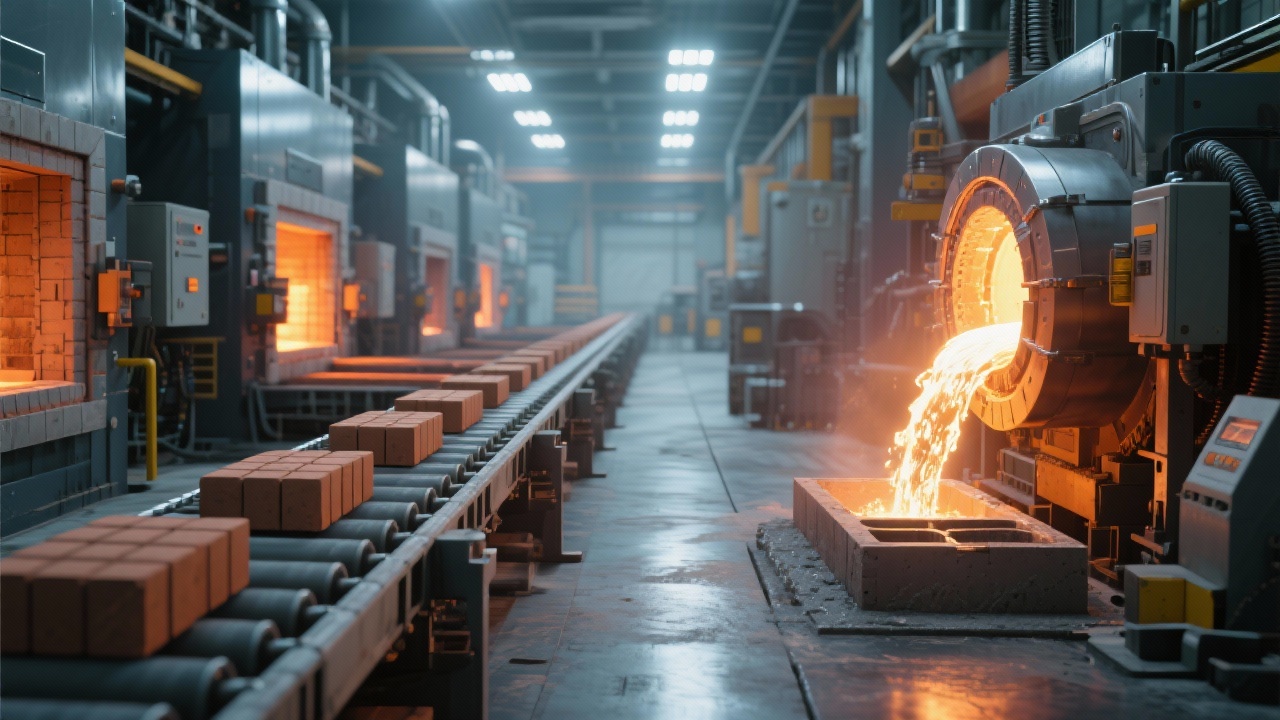
4) How to Select Low-Porosity Bricks Using a “Decision Checklist”
A disciplined selection workflow prevents most procurement mistakes. The goal is to transform “temperature range” into measurable acceptance criteria and eliminate ambiguity across suppliers.
Step 1 — Define the real working envelope
Record hot-face temperatures (mean/peak), ramp rate (°C/min), and dwell time. If sensor coverage is limited, use campaign logs + thermography to approximate hot spots.
Step 2 — Characterize the atmosphere & contaminants
Identify alkali, sulfur, chlorine, dust, and slag chemistry. A simple ash/slag analysis often explains why “good bricks” fail early.
Step 3 — Translate into measurable specs
- Apparent porosity target (e.g., ≤16% for hot-face dense grades)
- Al2O3 content target (e.g., 75–90% typical for high-alumina hot zones)
- RUL and PLC limits suited to load & temperature profile
- Thermal shock metric required for cycling zones
Step 4 — Validate with evidence, not brochures
Require recent batch test reports, production traceability, and (ideally) comparable field references in the same industry. Consistency matters more than “best-ever” lab numbers.
Infographic suggestion: Temperature–Performance relationship (for web layout)
| Temperature band |
Primary risk trend |
What to prioritize in low-porosity bricks |
| 1580–1650°C |
Thermal cycling + early infiltration |
Thermal shock + controlled porosity + stable bonding phases |
| 1650–1720°C |
Creep/deformation under load |
RUL/creep resistance + dense microstructure + consistent QC |
| 1720–1770°C |
Hot-face corrosion, slag attack, glaze formation |
Very low permeability + chemistry matched to slag/atmosphere |
5) Real-World Application Examples (Steel, Glass, Ceramics)
The following examples reflect common outcomes reported by plants after switching from standard dense bricks to better-engineered low-porosity grades in the 1580°C–1770°C regime. Exact results vary by design, maintenance, and firing discipline—but the failure modes are remarkably consistent.
Steel reheating / heat-treatment zones
In cycling furnaces, the common issue is joint cracking and hot-face spalling. When low-porosity high-alumina bricks (often ~75–85% Al2O3) are paired with compatible mortar and expansion allowances, plants frequently report 15–30% longer lining campaigns and more stable shell temperatures due to reduced infiltration and fewer localized failures.
Glass-related high-temperature sections
In areas exposed to alkali vapors and glass batch carryover, corrosion often begins as a slow penetration process, then accelerates. Low-porosity structures can reduce internal glazing and delay crack propagation. Plants commonly target lower apparent porosity (≤16%) and verify alkali resistance with relevant lab tests before committing.
Ceramic kilns (high peak temperatures)
For kilns with high peak temperatures and relatively clean atmospheres, deformation under load and thermal profile stability matter. Denser bricks often hold shape better, helping maintain a consistent heat curve. Operators frequently observe reduced unplanned maintenance and fewer “hot spot” corrections when lining integrity is improved.
The common thread across these industries is simple: once gases and molten species enter the lining, they rarely stop at the hot face. Low porosity reduces that transport, which is why it often translates into predictable, stable campaigns rather than surprise failures.
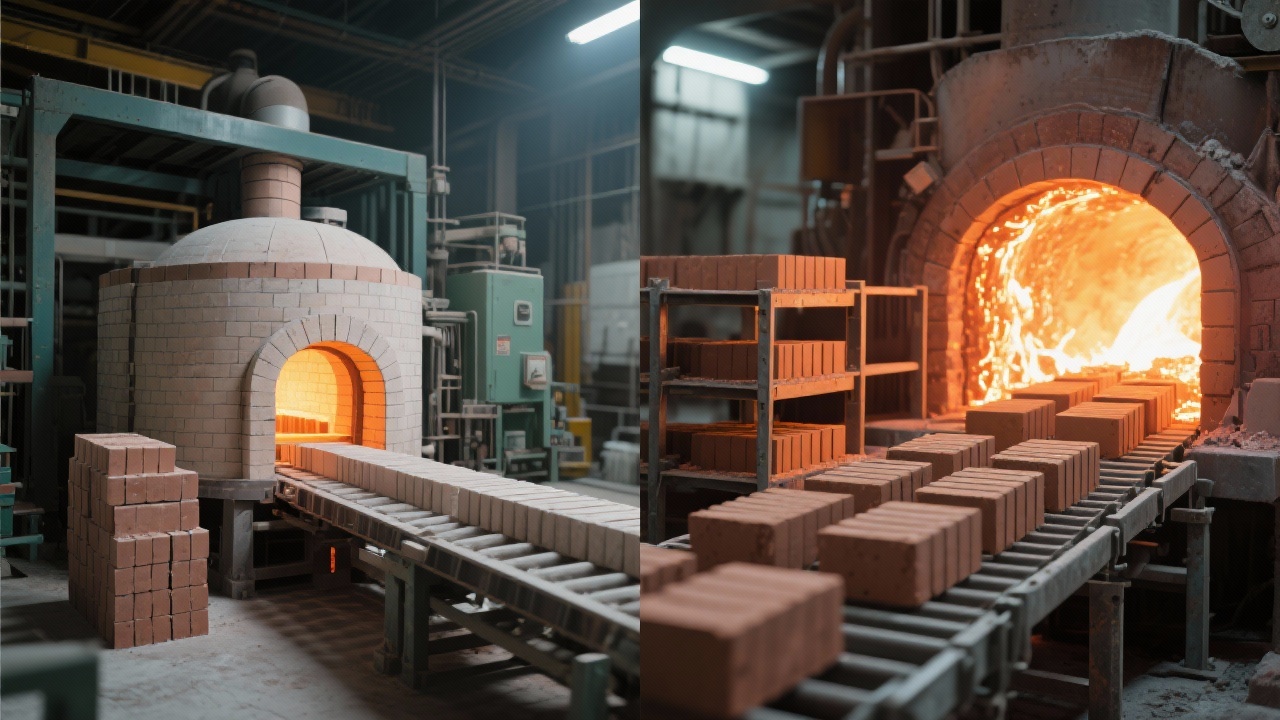
6) Common Selection Myths (and the Engineering Reality)
Myth 1: “Higher alumina always means longer life.”
Higher Al2O3 often improves refractoriness, but service life depends equally on microstructure, porosity/permeability, and compatibility with slags/alkalis. A well-designed 80% alumina low-porosity brick can outperform a poorly engineered 90% brick in a dirty atmosphere.
Myth 2: “A single temperature rating is enough for procurement.”
“Max service temperature” does not describe creep under load, thermal shock, or corrosion behavior. Decision-grade specs should include AP/BD, CCS, RUL, PLC, and at least one corrosion indicator relevant to your process.
Myth 3: “Low porosity fixes everything.”
Low porosity reduces infiltration, but incorrect installation, improper mortar, poor expansion joint design, or mismatched chemistry can still cause early failure. Low porosity is a performance amplifier—not a substitute for correct system design.
7) FAQ: What Engineers and Technical Managers Usually Ask
What porosity is considered “low” for dense refractory bricks in high-temperature zones?
Many dense low-porosity grades are typically in the ~12–16% apparent porosity range. The right target depends on the atmosphere and slag/alkali exposure; extremely low permeability is more valuable in chemically aggressive environments than in clean oxidizing zones.
Which alumina content is common for 1580°C–1770°C industrial furnace refractory brick selection?
High-alumina bricks in this range often fall around 70–90% Al2O3, while more extreme hot-face or chemically aggressive zones may use specialized corundum/mullite systems or industry-specific chemistries. Selection should be validated against load, thermal cycling, and chemical attack—not temperature alone.
How can buyers compare refractory brick performance between suppliers fairly?
Request recent test reports from the same standard methods, confirm batch consistency, and ask for field references under similar atmosphere and cycling conditions. Comparing only brochure “typical values” frequently leads to inconsistent results.
Will low-porosity bricks reduce fuel consumption?
Indirectly, yes—when lining integrity improves, heat losses from hot spots and frequent repairs decline. Many plants see measurable operational stability benefits; the biggest gains typically come from preventing premature wear that forces thicker safety margins, patching, or downtime.
Need a precise low-porosity refractory brick match for your 1580°C–1770°C furnace zone?
Share your working temperature profile, atmosphere notes, and operating cycle frequency. A technical review can quickly narrow down the most reliable low-porosity grade and the specs that matter for your campaign life.
A reliable selection is rarely “the most expensive brick.” It is the brick whose porosity, chemistry, and thermo-mechanical behavior match the furnace’s reality—hour after hour, cycle after cycle.