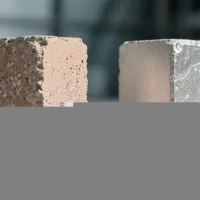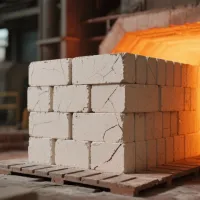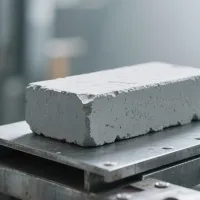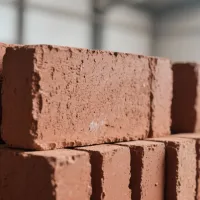
In high-temperature industrial environments, thermal shock resistance of refractory materials is vital for ensuring continuous, safe, and efficient operations. Magnesium-chrome refractory bricks, known for their superior performance in harsh conditions, owe their resilience to a carefully engineered composition and microstructural design. This article explores the technical principles driving their exceptional thermal shock resistance, highlighting key factors such as the magnesium-chrome ratio, silicate bonding agents, crystal boundary distributions, thermal expansion coefficients, and microcrack self-healing mechanisms.
The magnesium to chrome (MgO-Cr₂O₃) ratio critically influences both the thermal stability and mechanical strength of refractory bricks. An optimized MgO content between 65% to 75% balanced against Cr₂O₃ enhances material toughness and chemical stability. Additionally, the incorporation of silicate bonding agents fundamentally improves brick cohesion by promoting a more ductile interface between grains, thereby offering enhanced resistance against thermal stress-induced cracking. Laboratory data indicate that bricks formulated with silicate binders exhibit up to 30% greater breaking load under rapid temperature changes compared to those with traditional binders.
The internal microstructure plays a paramount role in preventing thermal shock failure. Strategic alignment and distribution of crystal boundaries within the brick matrix minimize localized stress concentrations during sudden temperature fluctuations. Magnesium-chrome bricks are engineered to have a closely matched thermal expansion coefficient (around 8.5 x 10⁻⁶ /°C) to the operating conditions, reducing thermal mismatch. This precise tuning limits microstrain and prolongs service life under repeated rapid heating and cooling cycles. Empirical thermal cycling tests show these bricks maintain integrity through hundreds of cycles with less than 3% dimensional variation.
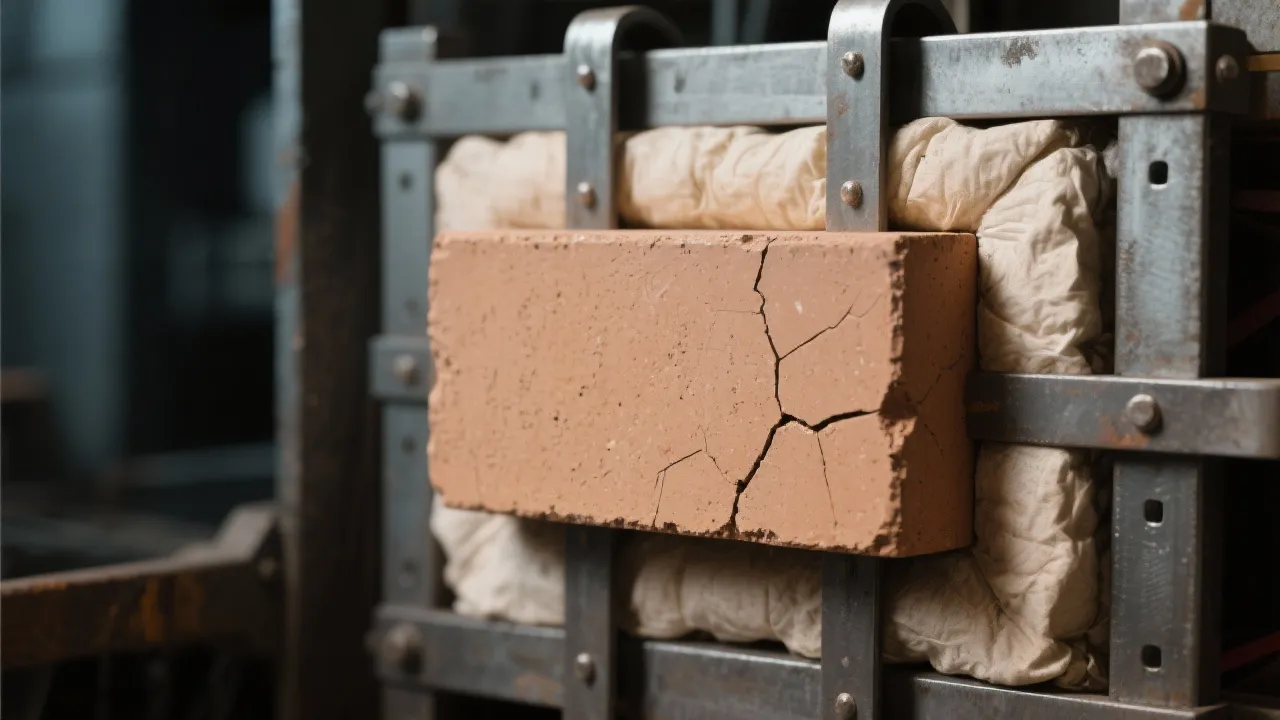
One of the most remarkable properties of magnesium-chrome refractory bricks is their intrinsic microcrack self-healing ability. Under high temperatures, unreacted silicate phases within the brick can undergo viscous flow or sintering that effectively “seal” emerging microcracks, restoring structural coherence. This dynamic repair process mitigates progressive crack propagation that would otherwise compromise mechanical strength and insulation. Field testing in steel ladle interiors demonstrates that self-healing behavior contributes to a 20-25% extension in refractory lifespan compared to non-healing counterparts.
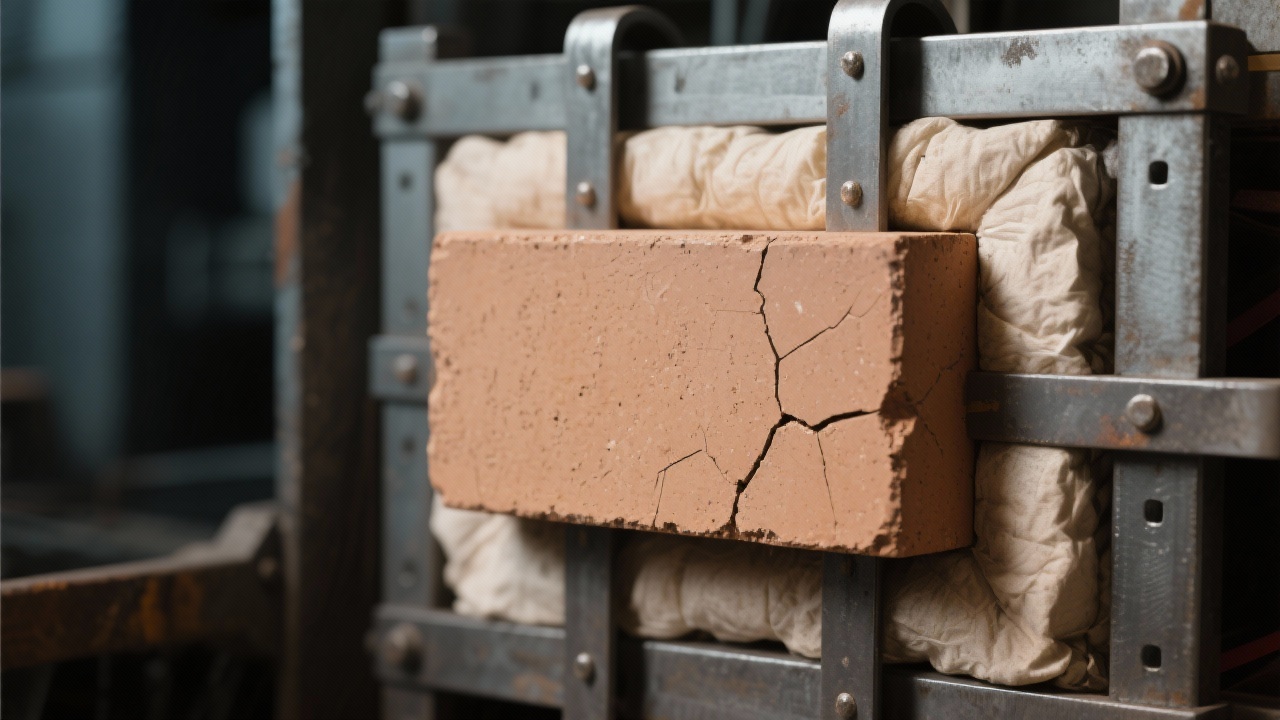
Reliable quality control of thermal shock resistance involves standardized testing protocols such as water quenching and air rapid cooling. The water quenching method subjects fired bricks to instantaneous cooling by immersion in water from high temperatures (above 1400°C), simulating worst-case thermal shock scenarios. Conversely, the air rapid cooling method employs forced air jets to replicate more moderate cooling gradients commonly found in service. Both approaches quantify damage by measuring residual strength and crack formation post-cycling. HuaNai High Temperature’s refractory products undergo over 500 cycles in these tests, consistently exceeding international performance benchmarks.
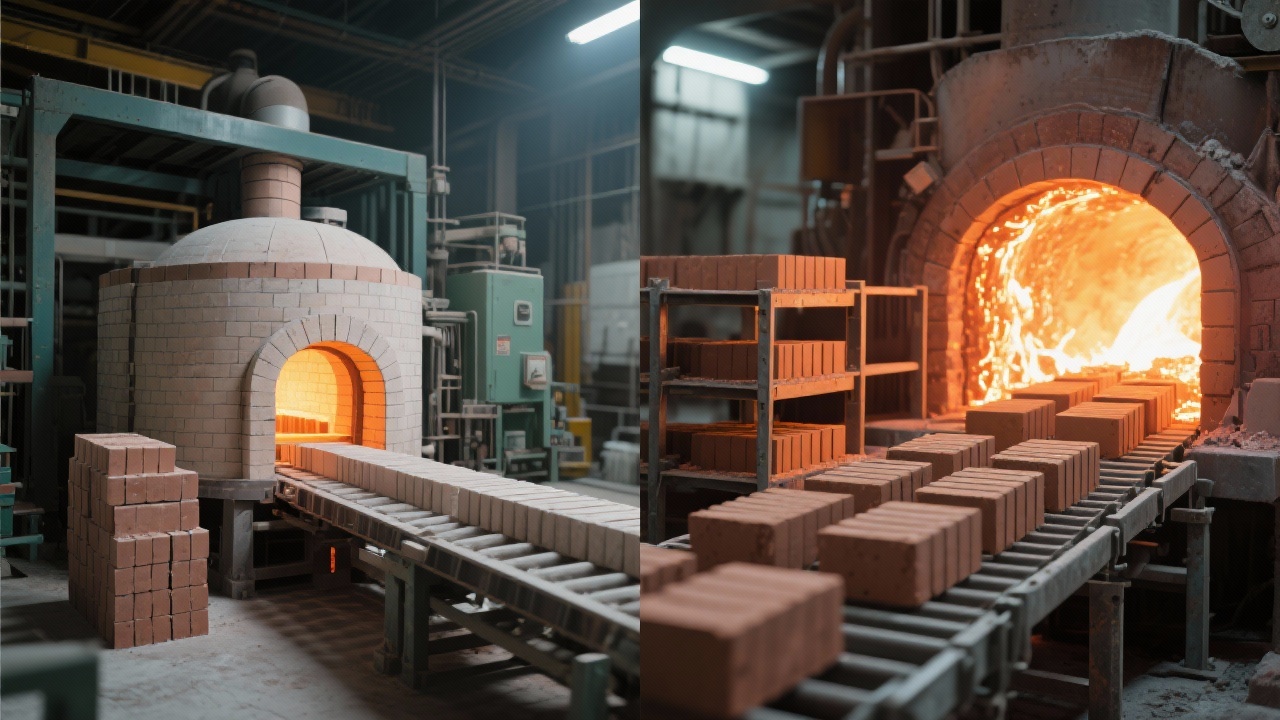
Industrial applications vary widely in thermal cycling frequency—from once per operational shift to multiple times per hour—which directly impacts refractory lifespan and performance. For facilities with high-frequency thermal shocks (above 10 cycles per day), HuaNai recommends magnesium-chrome bricks with enhanced silicate bonding and higher chromium content due to superior toughness and corrosion resistance. In contrast, applications with lower cycling benefit from standard formula bricks offering cost-effective reliability. These tailored solutions contribute significantly to reducing unplanned outages and energy waste by maintaining optimal insulation and mechanical integrity.

 484
|
484
|
 fused alumina brick
sintered alumina brick
glass melting furnace refractory
refractory brick selection
high-temperature refractory material
fused alumina brick
sintered alumina brick
glass melting furnace refractory
refractory brick selection
high-temperature refractory material
 102
|
electric arc furnace refractory materials
sintered magnesia carbon bricks
magnesia carbon brick thermal shock resistance
high-temperature furnace lining
magnesia carbon brick application cases
102
|
electric arc furnace refractory materials
sintered magnesia carbon bricks
magnesia carbon brick thermal shock resistance
high-temperature furnace lining
magnesia carbon brick application cases
 381
|
Copper smelting furnace life extension
Chrome corundum brick corrosion resistance
High-temperature refractory stability
Furnace maintenance technology
Metallurgical refractory solutions
381
|
Copper smelting furnace life extension
Chrome corundum brick corrosion resistance
High-temperature refractory stability
Furnace maintenance technology
Metallurgical refractory solutions
 356
|
corundum refractory bricks performance
alumina content >90%
high temperature refractory bricks
sintering vs fusion corundum bricks
refractory bricks for metallurgy
356
|
corundum refractory bricks performance
alumina content >90%
high temperature refractory bricks
sintering vs fusion corundum bricks
refractory bricks for metallurgy
 65
|
chrome corundum refractory bricks
copper smelting refractory materials
flash smelting refractory selection
converter refining refractory performance
high-temperature corrosion resistant bricks
65
|
chrome corundum refractory bricks
copper smelting refractory materials
flash smelting refractory selection
converter refining refractory performance
high-temperature corrosion resistant bricks