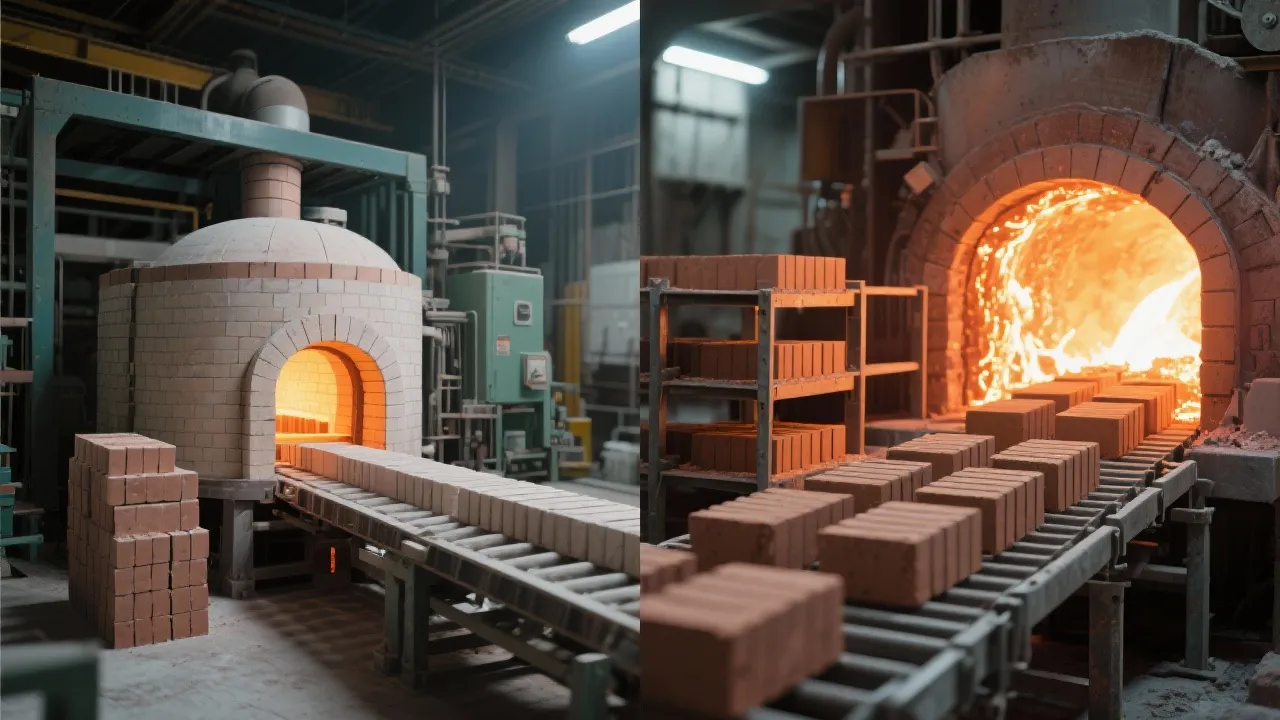
In modern high-temperature industrial applications, magnesium carbon bricks play a critical role in furnace linings, particularly in converter tapping and electric arc furnace bottoms. Ensuring their thermal shock stability is essential for enhancing refractory longevity and maintaining operational safety. This comprehensive analysis explores the evaluation techniques used to assess the thermal shock resistance of magnesium carbon bricks, focusing on how key compositional variables—including resin binders, graphite content, and particle size distribution—influence thermal conductivity and stress release mechanisms.
The performance of magnesium carbon bricks under thermal cycling primarily depends on their microstructure and constituent materials. The choice of resin binder affects bonding strength and porosity, which directly impacts crack propagation resistance. Modified phenolic resins with enhanced cross-linking density have demonstrated improvements in bonding integrity, reducing microcrack formation by approximately 15% compared to traditional binders.
Graphite content contributes significantly to thermal conductivity and dimensional stability. Research indicates that an optimal graphite content range between 12% to 16% by weight offers the best balance, enhancing heat dissipation while maintaining mechanical strength. Exceeding 18% graphite tends to reduce compressive strength by up to 10%, thereby increasing susceptibility to thermal shock damage.
Particle size distribution also governs the brick's packing density and thermal gradient tolerance. A well-graded particle size, combining coarse aggregates with fine fillers, has shown to improve thermal shock resistance by promoting uniform stress release during high-temperature exposure.
The 1100°C water quenching test is a standardized method widely employed to simulate harsh thermal shock conditions in laboratories. The test protocol involves heating the brick sample to 1100°C, holding it at this temperature for 30 minutes, followed by rapid water cooling for 10 seconds to generate intense thermal gradients. This cycle repeats until observable cracking or a predetermined reduction in mechanical integrity occurs.
Quantitative assessment leverages crack length measurements and residual flexural strength to classify bricks into different thermal shock resistance grades as per international standards such as ASTM C152 and ISO 17743, adapted for magnesium carbon refractories. For instance, a brick sustaining over 250 cycles without significant strength loss (>85% original strength) is deemed high-grade.
Figure 1 below illustrates typical microcrack propagation captured by scanning electron microscopy after 150 water quenching cycles, highlighting critical stress relief pathways inherent to the material’s microstructure.
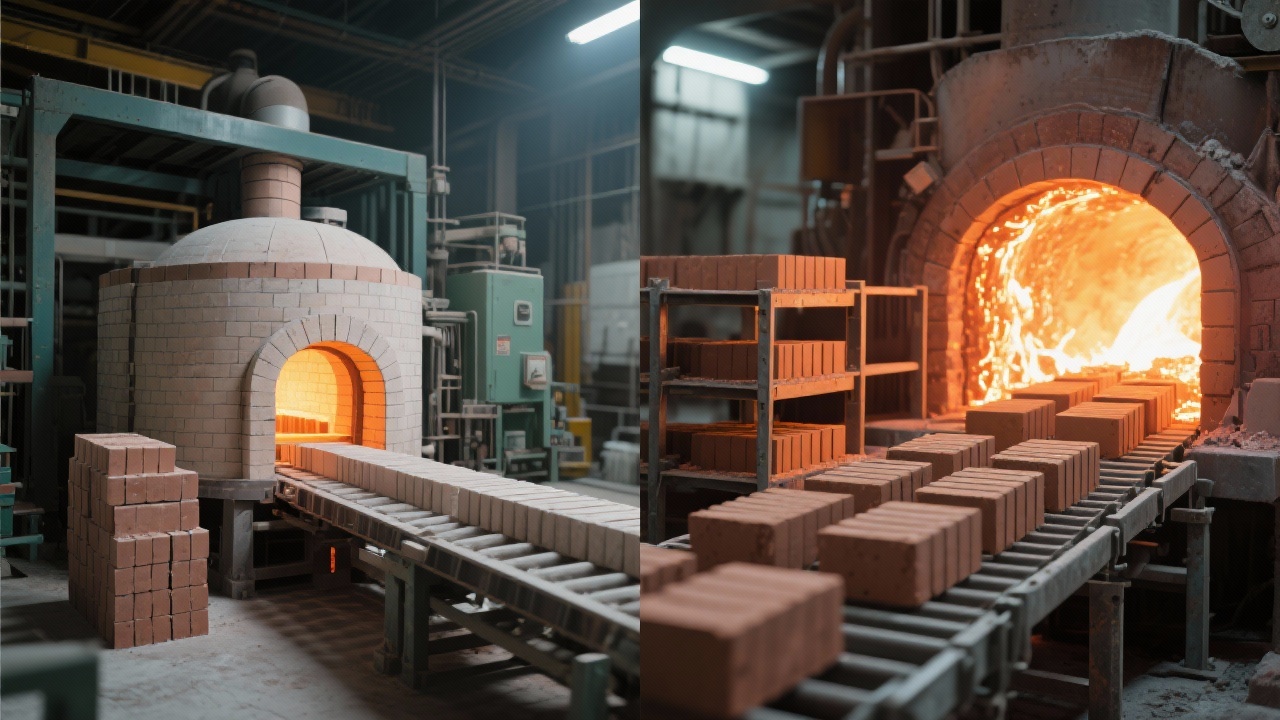
Distinct operational environments dictate appropriate refractory configurations. For converter tapping ports exposed to frequent temperature fluctuations and mechanical abrasion, bricks emphasizing enhanced resin binder strength and lower graphite content (~12%) have demonstrated superior service life, exceeding 200 heat cycles in field conditions.
Conversely, electric arc furnace bottoms require materials with higher thermal conductivity and oxidation resistance. Here, compositions with elevated graphite levels (14%–16%) and uniform fine particle distributions reduce thermal gradient-induced stress and inhibit spalling. Additionally, incorporating additives such as antioxidation agents like boron nitride suppresses oxidation-related degradation.
Figure 2 shows comparative phase composition changes in bricks from a converter port and an electric furnace after field exposure, underscoring the effectiveness of tailored compositions.
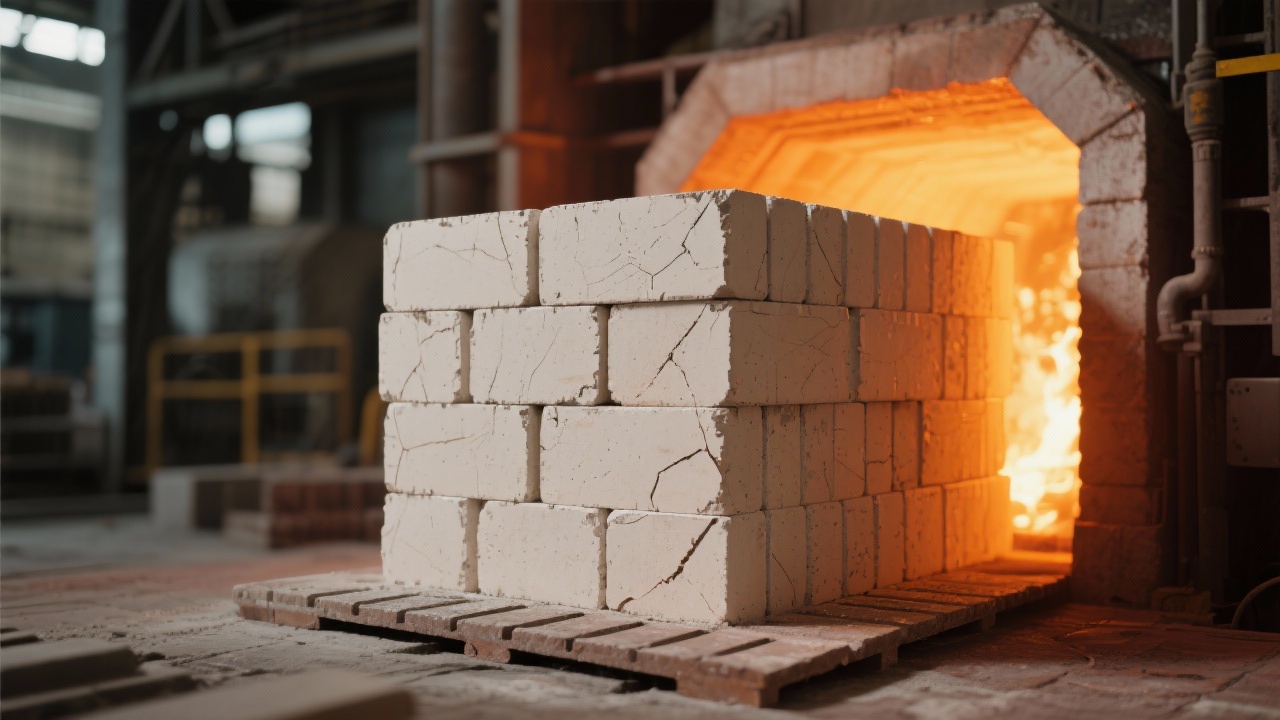
Integrating detailed experimental data with practical field feedback provides a robust foundation for continuous material innovation. Controlled 1100°C water cycle testing combined with fracture mechanics modeling enables precise prediction of crack initiation and growth, facilitating optimized mixtures and parameter control.
Advanced data visualization—such as thermal conductivity variation relative to graphite content and particle size—assists engineers in selecting bricks with ideal thermal and mechanical properties per application requirements.
Such data-driven approaches maximize furnace uptime while minimizing costly downtime and repair, proving critical for industries where reliability under extreme thermal cycling is non-negotiable.
 484
|
484
|
 fused alumina brick
sintered alumina brick
glass melting furnace refractory
refractory brick selection
high-temperature refractory material
fused alumina brick
sintered alumina brick
glass melting furnace refractory
refractory brick selection
high-temperature refractory material
 452
|
High alumina refractory clay bricks
Industrial furnace lining
High - temperature refractory materials
Wear - and corrosion - resistant refractory bricks
Furnace lining installation techniques
452
|
High alumina refractory clay bricks
Industrial furnace lining
High - temperature refractory materials
Wear - and corrosion - resistant refractory bricks
Furnace lining installation techniques
 378
|
Corundum refractory bricks
High alumina refractory materials
Metallurgy industry refractory bricks
Glass industry refractory bricks
Refractory brick selection
378
|
Corundum refractory bricks
High alumina refractory materials
Metallurgy industry refractory bricks
Glass industry refractory bricks
Refractory brick selection
 248
|
industrial furnace refractory brick selection
low porosity refractory bricks
1580–1770°C refractory lining
high alumina refractory bricks
thermal shock and corrosion resistant refractories
248
|
industrial furnace refractory brick selection
low porosity refractory bricks
1580–1770°C refractory lining
high alumina refractory bricks
thermal shock and corrosion resistant refractories
 43
|
High-alumina refractory clay bricks
Glass furnace refractory materials
High-temperature furnace lining technology
Refractory brick installation process
Refractory material application guide
43
|
High-alumina refractory clay bricks
Glass furnace refractory materials
High-temperature furnace lining technology
Refractory brick installation process
Refractory material application guide