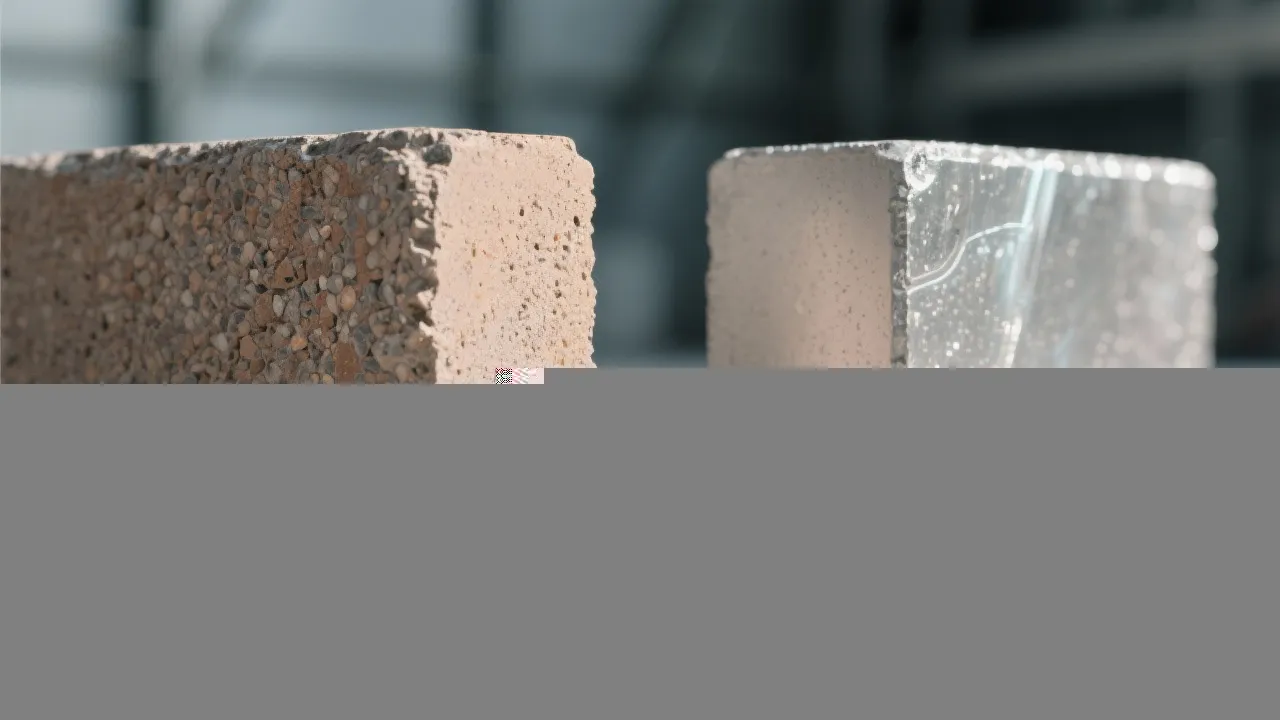
As a refractory engineer with over 15 years in steelmaking applications, I’ve seen firsthand how poor brick selection leads to premature furnace lining failure—costing mills thousands in downtime and safety risks. If you're responsible for choosing magnesia-chrome bricks for your converter, this guide will help you avoid costly mistakes.
When evaluating magnesium-chrome bricks for high-temperature converters, focus on four core metrics:
Many suppliers still use traditional dead-burned magnesia chrome bricks. But modern silicate-bonded bricks—especially those with controlled MgO/SiO₂ ratios—offer superior performance. In our lab tests, these bricks showed up to 25% better thermal shock resistance and 15% longer service life compared to conventional ones.
The key? A dense microstructure formed by sintering at 1450–1500°C under controlled atmosphere. This minimizes porosity and strengthens bonding between grains—critical for resisting molten slag penetration.
| Factor | What to Check |
|---|---|
| Temperature Range | Confirm average vs peak temps—use thermocouple logs from existing furnaces. |
| Slag Composition | Basic slags require higher Cr₂O₃ content (>20%). Acidic slags need more MgO. |
| Installation Requirements | Check compressive strength at room temp (min 120 MPa) and moisture sensitivity. |
| Quality Control | Request batch-wise test reports—not just one sample per order. |
A mid-sized Chinese steel plant switched from standard magnesia-chrome bricks to a silicate-bonded variant based on our checklist. Within six months, their average furnace campaign increased from 1,200 heats to 1,560—saving over $80,000 annually in maintenance and labor costs. The real win? Zero unplanned shutdowns due to lining failure.
Pro Tip: Don’t just compare specs—ask for field data from similar plants. A supplier who shares anonymized case studies is likely more transparent than one who only quotes numbers.
 483
|
483
|
 fused alumina brick
sintered alumina brick
glass melting furnace refractory
refractory brick selection
high-temperature refractory material
fused alumina brick
sintered alumina brick
glass melting furnace refractory
refractory brick selection
high-temperature refractory material
 295
|
high-alumina refractory bricks
glass furnace refractories
refractory brick wear resistance testing
corrosion resistant refractory bricks
industrial furnace lining solutions
295
|
high-alumina refractory bricks
glass furnace refractories
refractory brick wear resistance testing
corrosion resistant refractory bricks
industrial furnace lining solutions
 38
|
high alumina fire clay brick
industrial furnace lining
refractory material technology
thermal shock resistant brick
custom refractory solution
38
|
high alumina fire clay brick
industrial furnace lining
refractory material technology
thermal shock resistant brick
custom refractory solution
 314
|
High - alumina refractory bricks
Hot blast stove lining
Thermal shock resistance
Low thermal conductivity
Refractory material application
314
|
High - alumina refractory bricks
Hot blast stove lining
Thermal shock resistance
Low thermal conductivity
Refractory material application
 190
|
corundum refractory brick
high alumina refractory
fused vs sintered refractory
wear resistant refractory
ceramic industry refractory
190
|
corundum refractory brick
high alumina refractory
fused vs sintered refractory
wear resistant refractory
ceramic industry refractory