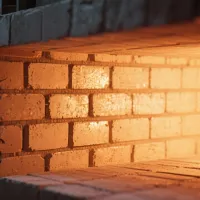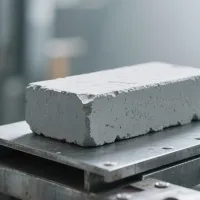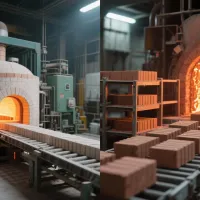
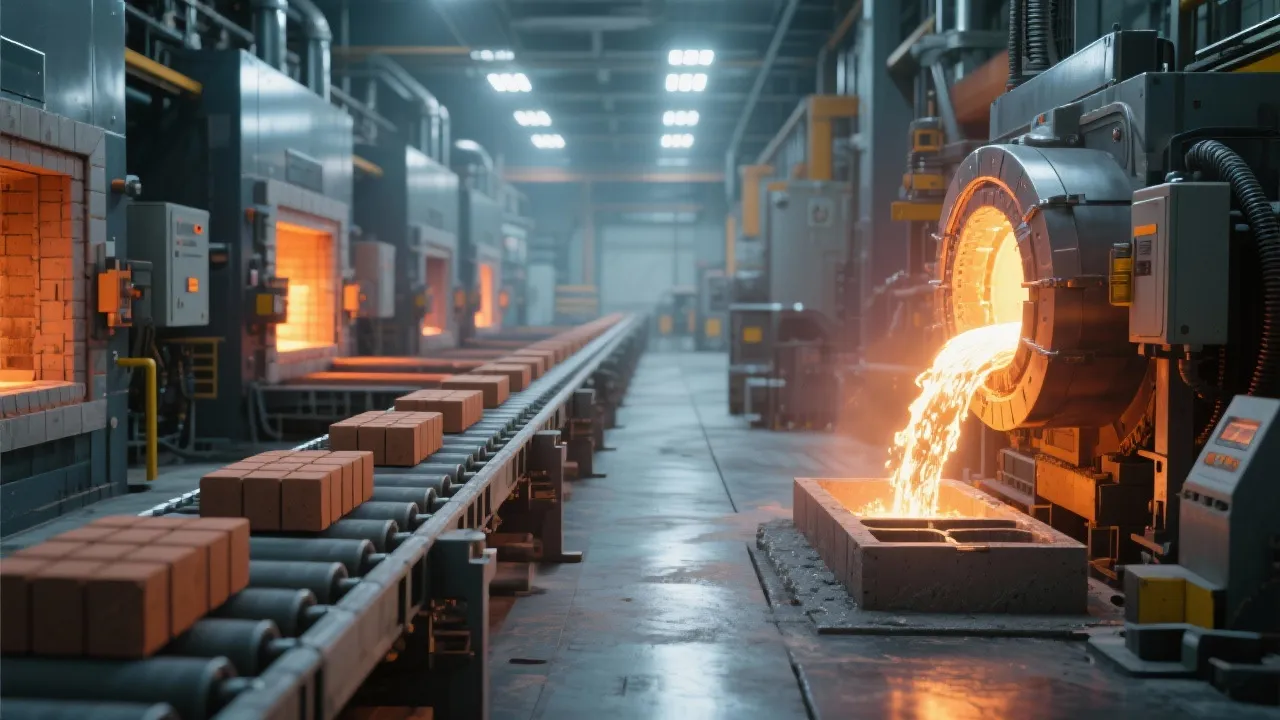
In advanced industrial environments, the demand for refractory materials capable of sustaining temperatures beyond 2000°C is critical. The Mag-Chrome refractory brick, produced by Huannai High Temperature, exemplifies cutting-edge performance by leveraging a unique microstructure resulting from high-purity magnesia and chrome ore raw materials. This article explores the intrinsic qualities of Mag-Chrome bricks, emphasizing their superior thermal shock resistance, corrosion resistance, and durability — vital factors driving their extensive use in high-temperature industrial furnaces and metallurgical equipment.
At the heart of Mag-Chrome refractory bricks’ remarkable performance lies their carefully controlled microstructure. The bricks comprise sintered magnesia (MgO) particles intimately combined with high-purity chromite ore (FeCr₂O₄), bound through a specialized salt bonding agent. This combination results in a dense and stable mineral phase that minimizes porosity and prevents the formation of weak interfaces, crucial for maintaining structural integrity at ultrahigh temperatures.
Extensive studies reveal that the dense bonding reduces the volume change rate during heating and cooling cycles to below 0.15%—a pivotal factor for preventing crack propagation under thermal shock stress. The microstructural stability is also enhanced by the formation of spinel phases that resist grain growth, ensuring consistent density and strength even after prolonged exposure to temperatures above 2000°C.
One of the defining features of Mag-Chrome refractories is their exceptional resistance to thermal shocks characterized by rapid temperature fluctuations common in industrial processes. The key to this resilience lies in their low thermal expansion coefficient (~8.5 x 10⁻⁶ /°C), combined with high hot modulus of rupture (often >35 MPa at 1600°C) and high creep resistance.
This allows the bricks to absorb and release thermal stress without catastrophic failure. The mineral phases act to buffer internal stress by redistributing it across the material matrix, effectively reducing microcrack initiation, which distinguishes Mag-Chrome bricks from conventional magnesia bricks whose performance deteriorates significantly after repeated thermal cycling.
Besides thermal properties, Mag-Chrome bricks possess remarkable chemical stability. Their intrinsic corrosion resistance, particularly against aggressive slags and oxidizing atmospheres, is attributed to chrome oxide's ability to form protective layers that impede penetration of corrosive agents.
This anti-corrosion and anti-slag performance significantly reduces material wear and deformation, thereby extending the service life of lining materials in steelmaking converters, rotary kilns, and other high-temperature equipment. Data from industrial case studies indicate up to 30% increase in service intervals compared to traditional magnesia bricks, translating into substantial operating cost savings and reduced downtime.
The following table summarizes key performance metrics contrasting Mag-Chrome refractory bricks with ordinary magnesia bricks:
| Property | Mag-Chrome Brick | Conventional Magnesia Brick |
|---|---|---|
| Max Operating Temperature | >2000°C | ~1850°C |
| Hot Modulus of Rupture (1600°C) | >35 MPa | 20-25 MPa |
| Thermal Expansion Coefficient | ~8.5 x10⁻⁶ /°C | ~9.5 x10⁻⁶ /°C |
| Resistance to Corrosion and Slag | High | Moderate |
| Service Life Extension | ~30% longer | Baseline |
Selecting the appropriate refractory material is pivotal in optimizing furnace performance and maintenance schedules. Mag-Chrome bricks are particularly well-suited for critical zones exposed to intense heat and corrosive slags, such as steel ladle linings, rotary kiln noses, and glass furnace regenerators.
Employing Huannai’s Mag-Chrome refractory products can substantially reduce operational downtimes, lower replacement frequency, and enhance energy efficiency due to their excellent insulating properties and thermal conductivity. Moreover, the bricks’ dimensional stability under frequent thermal cycling minimizes repair interventions.
Mag-Chrome bricks contain chromium oxide, which forms stable protective layers against chemical attack and slag infiltration, significantly improving corrosion resistance compared to standard magnesia bricks.
Q2: Can Mag-Chrome refractory bricks withstand rapid temperature changes?Yes, their low thermal expansion and dense microstructure enable excellent thermal shock resistance, sustaining rapid temperature fluctuations without cracking.
Q3: What are typical service life improvements when switching to Mag-Chrome bricks?Operational data typically show a 20-30% increase in service life versus conventional magnesia bricks, depending on working conditions.
Q4: Are Mag-Chrome bricks suitable for all zones in an industrial kiln?They are most effective in high-stress areas exposed to extreme heat and corrosion. For less demanding zones, alternative cost-effective materials may be considered.
 452
|
452
|
 High alumina refractory clay bricks
Industrial furnace lining
High - temperature refractory materials
Wear - and corrosion - resistant refractory bricks
Furnace lining installation techniques
High alumina refractory clay bricks
Industrial furnace lining
High - temperature refractory materials
Wear - and corrosion - resistant refractory bricks
Furnace lining installation techniques
 404
|
blast furnace refractory brick maintenance
low porosity refractory bricks
3 checks 2 controls
refractory brick service life extension
thermocouple overheating monitoring
404
|
blast furnace refractory brick maintenance
low porosity refractory bricks
3 checks 2 controls
refractory brick service life extension
thermocouple overheating monitoring
 353
|
chromia corundum refractory bricks
copper smelting refractory materials
refractory brick performance
thermal shock resistant bricks
refractory failure analysis
353
|
chromia corundum refractory bricks
copper smelting refractory materials
refractory brick performance
thermal shock resistant bricks
refractory failure analysis
 88
|
blast furnace refractory brick maintenance
refractory brick damage types
refractory brick inspection
extending refractory brick lifespan
three checks and two controls
88
|
blast furnace refractory brick maintenance
refractory brick damage types
refractory brick inspection
extending refractory brick lifespan
three checks and two controls
 177
|
corundum refractory brick
high-alumina refractory materials
refractory brick service life improvement
refractory material applications
alumina content over 90%
177
|
corundum refractory brick
high-alumina refractory materials
refractory brick service life improvement
refractory material applications
alumina content over 90%