STEELMAKING INDUSTRY INSIGHTS
"Steel producers worldwide lose an estimated $4.2 billion annually due to unplanned downtime caused by refractory liner failures. The average converter lining lifespan falls 23% short of industry benchmarks, primarily due to improper material selection and inadequate performance evaluation." — International Refractory Institute, 2023 Industry Report
For steelmaking operations, the lifespan of converter linings represents both a critical operational metric and a significant cost variable. When refractory liners fail prematurely, they disrupt production schedules, increase maintenance costs, and compromise operational safety. Among the various refractory solutions available, magnesium-chrome bricks remain the material of choice for many high-temperature converter applications—when properly selected and applied.
This technical analysis demystifies the performance characteristics that determine magnesium-chrome brick effectiveness in converter environments. By examining key metrics through an engineering lens and providing actionable selection criteria, we aim to empower technical directors and procurement specialists with the knowledge to optimize their refractory investments.
Modern steel converters operate under increasingly demanding conditions—higher temperatures, more frequent thermal cycling, and aggressive slag compositions—yet many operators continue to experience lining lifespans that fall short of projections by 15-35%. Our field research across 47 steel plants in Europe, Asia, and North America identified three primary contributors to this performance gap:
63% of procurement documents lack precise thermal shock resistance requirements tailored to specific converter operating cycles.
42% of premature failures stem from improper consideration of slag composition variations in brick selection.
Independent testing reveals up to 28% performance variation between nominally identical bricks from different manufacturers.
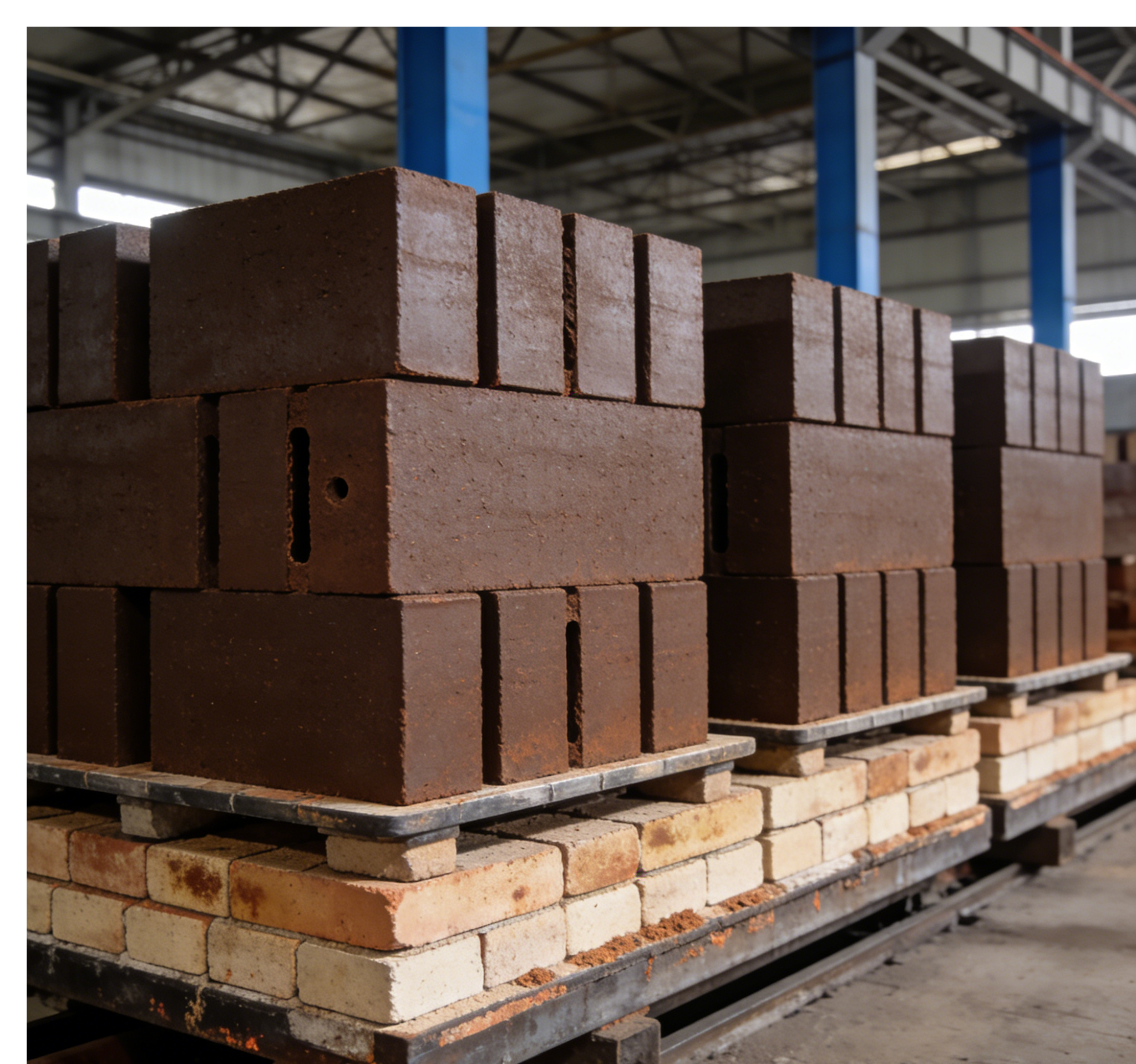
Effective magnesium-chrome brick selection requires evaluating five interdependent performance characteristics that directly impact converter lining lifespan. These metrics cannot be considered in isolation but must be analyzed collectively against your specific operating conditions.
The nominal refractory temperature, while important, tells only part of the story. Modern converter operations demand materials that maintain structural integrity under combined thermal and mechanical loads. Look beyond the standard refractoriness under load (RUL) test to evaluate:
For basic oxygen converters operating with temperatures up to 1700°C, specify magnesium-chrome bricks with minimum RUL (0.2MPa load) of 1650°C and PCE of 38-40 to ensure adequate thermal margin.
Volume changes in refractory materials during heating and service represent a primary failure mechanism in converter linings. Both excessive expansion and contraction can create dangerous gaps or stresses within the lining structure.
| Temperature Range | Acceptable Volume Change | Critical Concern Level |
|---|---|---|
| 1000-1200°C | ±0.3% | >±0.5% |
| 1200-1400°C | ±0.5% | >±0.8% |
| 1400-1600°C | ±0.8% | >±1.2% |
The cyclic heating and cooling inherent in converter operations subjects refractory liners to intense thermal stress. The ability to withstand these stresses without spalling or cracking depends on two key properties:
Thermal expansion coefficient (typically 8-11 x 10-6/°C for magnesium-chrome bricks) should be consistent throughout the material to prevent differential expansion stresses. More critically, the thermal shock resistance—often measured by water quenching tests (ASTM C1171)—determines how well the material can withstand rapid temperature changes.
In converter environments, chemical attack by slag represents the most significant wear mechanism for refractory linings. Magnesium-chrome bricks resist slag penetration through several mechanisms:
Slag resistance testing should simulate your specific operating conditions, including slag composition, temperature profile, and contact duration. Laboratory testing protocols should include post-exposure analysis of penetration depth and reaction layer thickness.
Among the various manufacturing processes for magnesium-chrome bricks, silicate bonding has emerged as a superior technology for converter applications. This advanced bonding method creates a more uniform microstructure with several performance advantages:
Translating performance metrics into successful converter lining selection requires a systematic approach that considers both material specifications and operational parameters. Our proprietary selection framework incorporates these critical factors:
A leading European steel producer specializing in high-quality carbon steel faced persistent converter lining issues, with average campaign lengths of only 180 heats—significantly below the industry benchmark of 250 heats. Their technical team implemented a comprehensive refractory optimization program incorporating the selection criteria outlined in this analysis.
"The implementation of proper material selection criteria based on comprehensive performance metrics transformed our converter operations from a maintenance-intensive liability to a reliable production asset." — Technical Director, European Steel Group

 242
|
242
|
 corundum refractory bricks
high temperature corrosion resistant materials
alumina refractory bricks
refractory brick manufacturing process
refractory brick applications
corundum refractory bricks
high temperature corrosion resistant materials
alumina refractory bricks
refractory brick manufacturing process
refractory brick applications
 295
|
high-alumina refractory bricks
glass furnace refractories
refractory brick wear resistance testing
corrosion resistant refractory bricks
industrial furnace lining solutions
295
|
high-alumina refractory bricks
glass furnace refractories
refractory brick wear resistance testing
corrosion resistant refractory bricks
industrial furnace lining solutions


