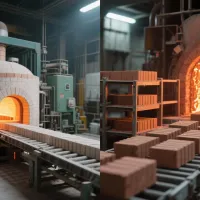

Refractory materials play a crucial role in the durability and efficiency of high-temperature industrial processes, notably in steelmaking, chemical production, and power generation. Despite advanced manufacturing techniques, these materials occasionally experience failure modes such as cracking, spalling, erosion, and deformation. Recognizing the root causes behind these failures is essential for selecting the right materials and ensuring long-lasting performance.
Several interrelated factors affect the performance and longevity of refractory materials:
Effective evaluation integrates both on-site inspection and laboratory testing to detect early signs of damage or performance decline. Key assessment techniques include:
By systematically diagnosing failure causes, industrial operators can optimize refractory selection, improve installation procedures, and apply targeted maintenance strategies to extend service life.
“At Shandong Huannai Refractory Materials Co., Ltd., our commitment to advanced research and strict quality control underpins our ability to provide durable refractory solutions engineered to resist common failure mechanisms in demanding industrial environments.”
With over a decade of experience and a comprehensive product portfolio—ranging from high alumina bricks to advanced casting and spraying materials—Shandong Huannai offers expertise beyond products. Our integrated services include material selection consultation, customized designs, expert installation guidance, and lifecycle support, enabling clients worldwide to achieve enhanced reliability in high-temperature operations.
Understanding the root causes of refractory failure empowers industrial customers to mitigate risks and enhance furnace performance. We invite our partners across Southeast Asia, the Middle East, Europe, and South America to leverage our technological insights and quality products for sustained operational success.

 292
|
292
|
 Industrial refractory materials
High-temperature industry
Furnace lining protection
Material classification
Shandong Huannai
Industrial refractory materials
High-temperature industry
Furnace lining protection
Material classification
Shandong Huannai
 260
|
Industrial Refractory Materials
High-Temperature Industry
Furnace Lining Materials
High Alumina Bricks
Shandong Huannai Refractory Materials
260
|
Industrial Refractory Materials
High-Temperature Industry
Furnace Lining Materials
High Alumina Bricks
Shandong Huannai Refractory Materials
 59
|
magnesia-chrome refractory
thermal shock resistance
refractory composition optimization
silicate binder
microcrack self-healing
59
|
magnesia-chrome refractory
thermal shock resistance
refractory composition optimization
silicate binder
microcrack self-healing
 83
|
steelmaking furnace magnesia carbon brick installation
magnesia carbon brick spalling
magnesia carbon brick bulging treatment
refractory lining lifespan extension
furnace baking curve optimization
83
|
steelmaking furnace magnesia carbon brick installation
magnesia carbon brick spalling
magnesia carbon brick bulging treatment
refractory lining lifespan extension
furnace baking curve optimization
 367
|
magnesia carbon bricks alkali slag resistance
high-temperature refractory materials
antioxidant effects
protective carbon layer formation
sintered magnesia carbon bricks
367
|
magnesia carbon bricks alkali slag resistance
high-temperature refractory materials
antioxidant effects
protective carbon layer formation
sintered magnesia carbon bricks