Refractory Brick Thermal Shock Testing: Water Quench vs Air Cooling (ISO & ASTM Guide)
2026-02-21
Huana High Temperature
Tutorial Guide
This guide explains how to evaluate refractory brick thermal shock resistance using the two most common industrial methods: water quench and air cooling. It clarifies the working principles, typical use cases, and selection logic behind each approach, with practical references to widely used standards such as ASTM C1259 and ISO 18897. The article also connects test outcomes to material design—showing how low porosity structures reduce stress concentration and slow crack propagation, and how a 30–46% Al2O3 range supports dense, stable performance under cyclic heating and cooling. Key standard clauses are summarized to help users judge pass/fail criteria and verify the credibility of supplier test reports. Finally, it translates test data into actionable maintenance and lining-selection decisions to improve kiln availability and extend refractory service life, and directs readers to our certified high-stability, long-life refractory solutions for heavy-industry applications.
Choosing the Right Refractory Brick Thermal Shock Test: Water Quench vs. Air Cooling
Thermal shock resistance is not a “nice-to-have” metric—it's a direct predictor of unplanned shutdowns, spalling losses, and lining replacement frequency in cement, steel, non-ferrous, and petrochemical furnaces. Yet many procurement decisions still rely on test reports that look legitimate but don’t match the real temperature gradients and cooling severity of the customer’s kiln or furnace.
This guide explains the two mainstream methods—water quench (water cooling) and air cooling—and how to select the correct one using ISO/ASTM logic, while linking results to material structure (especially low porosity and 30–46% Al2O3 alumina bricks).
1) Two Test Philosophies: “Maximum Severity” vs. “Operational Reality”
Both methods aim to reveal how rapidly induced thermal stress creates microcracks and drives crack propagation. The difference is the cooling severity, which governs the thermal gradient (ΔT across the brick) and the resulting stress level.
Item
Water Quench (Water Cooling)
Air Cooling
Cooling severity
Very high (fast heat extraction)
Moderate (closer to many furnace cycles)
Typical ΔT on surface
Often 600–1000°C step change (depending on soak temp)
Commonly 200–600°C step change
Best for simulating
Emergency water wash, sudden quench events, extreme thermal gradients
Planned shutdown/start-up, cyclic door opening, normal process cycling
Main output
Cycles to visible cracks / strength retention / modulus change
Crack density growth and durability under “realistic” gradients
How suppliers may “game” it
Lower soak temperature or shorter soak time to reduce gradient
Overly gentle airflow, long cooling time, or small sample geometry
In practice, water quench tests are excellent for “worst-case screening,” while air cooling tests often provide better decision support when the plant experiences frequent but less violent thermal cycling.
2) How the Test Works (and What Engineers Should Watch)
Water Cooling (Quench) Method: When the Gradient Is the “Enemy”
The brick specimen is heated to a defined temperature, held long enough to approach a stable internal temperature profile, then rapidly cooled in water. This produces a steep temperature gradient near the surface—exactly the condition that drives surface tensile stress and crack initiation.
For many alumina-based bricks used in heavy industry, typical soak temperatures are 950–1100°C, with repeated cycles until a defined damage criterion is reached (for example, visible cracking, mass loss, or strength retention drop). In a severe quench, crack growth rates can increase from “stable microcracking” to fast propagation, sometimes on the order of 0.1–0.8 mm per cycle depending on microstructure and existing flaws.
Air Cooling Method: When the Goal Is Process-Relevant Durability
Air cooling (natural or forced) reduces the cooling rate and better matches many operational scenarios: kiln hood temperature swings, charging/discharging cycles, and scheduled shutdowns. Instead of “survive the harshest quench,” the evaluation becomes “maintain integrity across many realistic cycles.”
A useful engineering view is to compare your actual event: if the lining experiences temperature drops of 250–500°C within minutes, air cooling data can be more predictive than quench results. If you have genuine quench exposure (wash-down, sudden ingress of cold media), water cooling should be mandatory.
3) Why Low Porosity and 30–46% Al2O3 Matter in Thermal Shock
Thermal shock damage is not only about “strength.” It is about how stress concentrates at pores, grain boundaries, and microcracks, and how easily those cracks link into a visible fracture network. Two structural levers repeatedly show up in plant performance: porosity and alumina content.
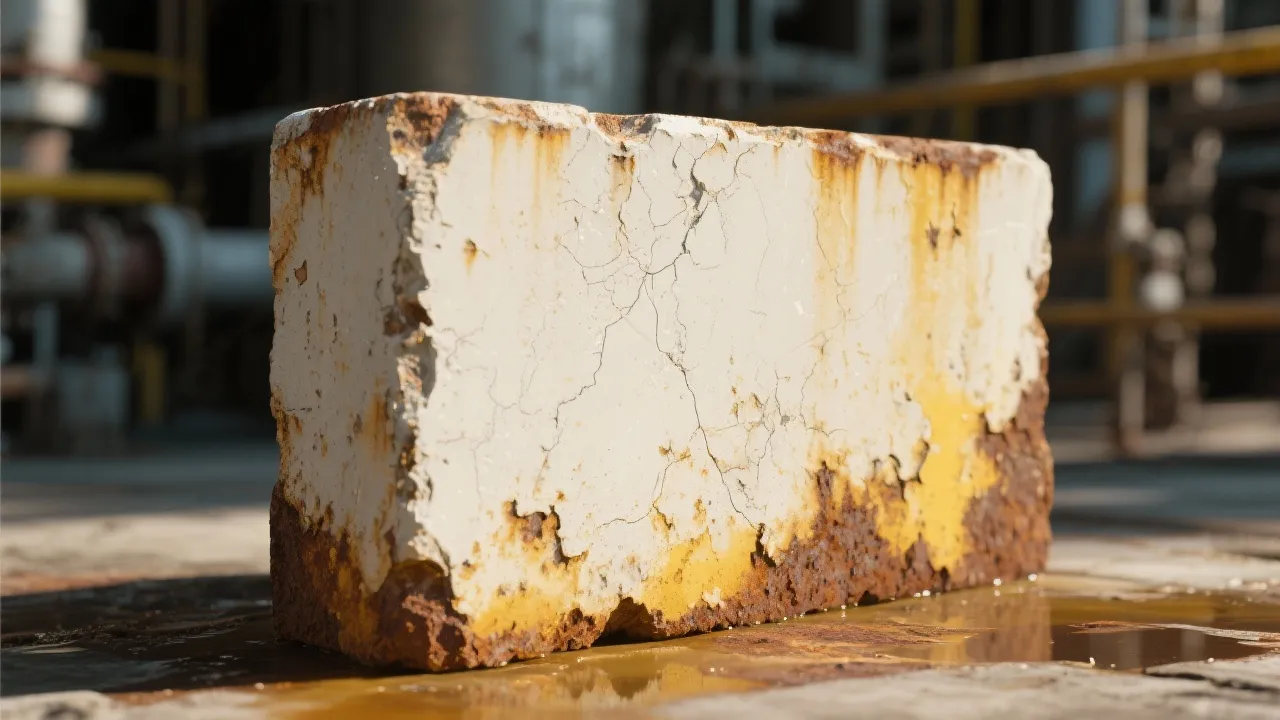
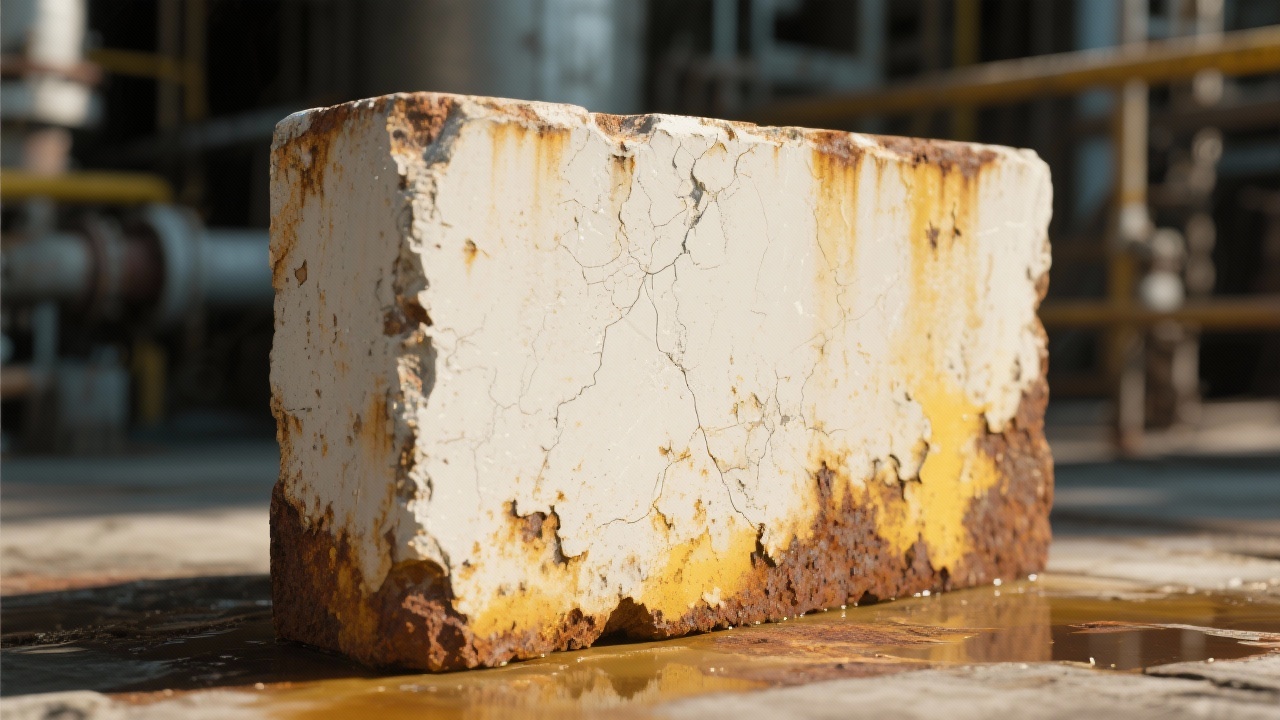
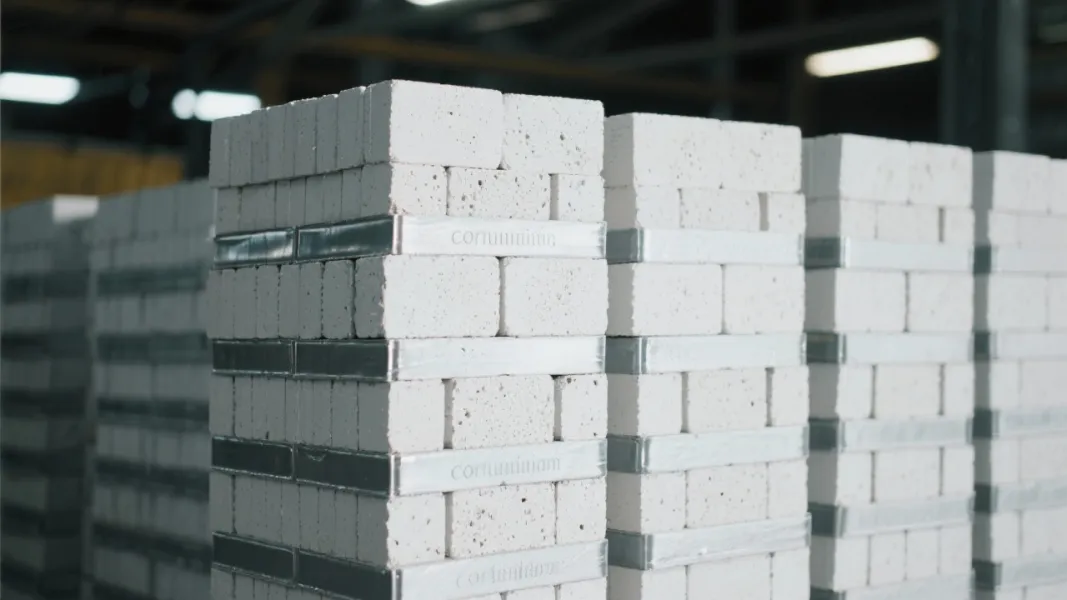
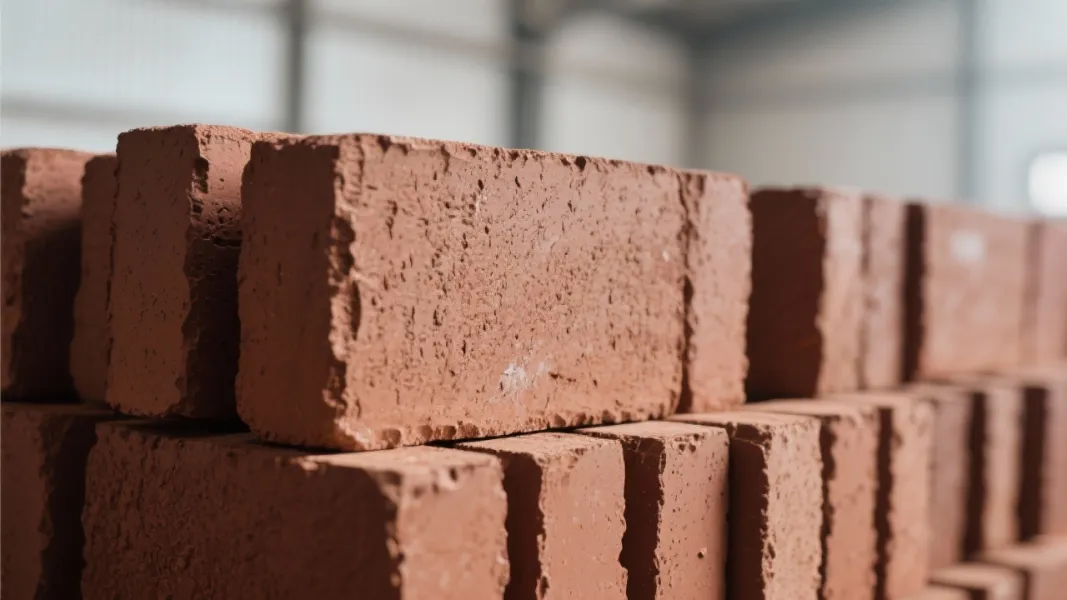
Lower apparent porosity generally reduces the number of internal voids where stress concentrates. In thermal cycling, that can mean fewer initiation sites and improved resistance to crack coalescence. For dense alumina bricks, apparent porosity often falls around 13–18%, while more porous grades can exceed 20–24%. As porosity rises, thermal shock often shifts from “microcrack tolerance” to “macrocrack growth,” especially under water quench.
30–46% Al2O3: a practical balance of refractoriness and structure
In many industrial linings, alumina in the 30–46% band can deliver stable hot strength and refractoriness while maintaining a workable microstructure for thermal cycling. With proper firing and grading, these compositions can achieve higher density and more stable bonding phases, supporting better retention of cold crushing strength after repeated shocks (a common acceptance indicator in QA reports).
A practical takeaway for decision-stage buyers: if a supplier claims “excellent thermal shock resistance,” but the brick also shows high porosity and inconsistent bulk density in the datasheet, the test report deserves deeper verification—especially if the method used was air cooling only.
4) ISO & ASTM Standards: What to Check (and How to Spot Weak Reports)
Decision-stage users often receive thermal shock “certificates” that omit the very parameters that control severity. When reviewing ISO/ASTM-based results, focus less on the headline (e.g., “passed 30 cycles”) and more on whether the test conditions are traceable and relevant.
Verification checklist for thermal shock test data (procurement-ready)
Soak temperature & hold time: Look for explicit numbers (e.g., 1000°C, 30 minutes). “Heated sufficiently” is not acceptable.
Cooling medium details: Water temperature (often 15–25°C), immersion time, and agitation for quench; airflow rate or cooling time profile for air cooling.
Specimen geometry & orientation: Dimensions, edge preparation, and surface condition. Small/thin specimens can inflate cycle counts.
Damage criterion: Visible crack threshold, strength retention (e.g., >70% after N cycles), elastic modulus change, or ultrasonic velocity drop.
Replicates & dispersion: At least 3–5 specimens with average and standard deviation. Single-sample results are risky.
Pre-conditioning: Drying schedule and any pre-firing cycles. Moisture differences can distort early-cycle cracking.
If a report shows an unusually high cycle number but lacks water temperature, quench time, specimen size, or the defined failure mode, it’s not necessarily “fake”—but it is not decision-grade. Request the full test protocol or third-party lab traceability before approving a high-volume order.
5) Practical Selection Logic for Maintenance Teams and Procurement
A reliable approach is to start from the plant’s real thermal event and map it to a test severity. The goal is not to pick the “hardest” method by default, but the one that best predicts service life and lining stability.
Choose water quench when:
Your process has credible quench exposure (wash-down, emergency cooling, cold feed ingress).
Failure mode in the field is rapid spalling after abrupt stops.
You need a strict incoming QA screen to reject brittle batches quickly.
Choose air cooling when:
Your primary stressor is frequent cycling rather than catastrophic quench.
You aim to optimize planned maintenance intervals (predictable wear rather than sudden failure).
You want better correlation with controlled shutdown/start-up protocols.
Many heavy-industry buyers now request both: air cooling for cycle durability plus water quench as a robustness check. When the two results disagree sharply, it often points to microstructural sensitivity—such as pore structure, glassy phase content, or grain size distribution—which deserves a deeper technical review before scale-up.
High-Stability Alumina Refractory Bricks for Thermal Cycling: Built for Long Service Life
For operations where thermal cycling directly drives cost—downtime, relining labor, and energy loss—selecting a brick with high structural stability, long service life, and international heavy-industry certifications turns thermal shock data into real operating margin.
What decision-makers typically value
Repeatable thermal shock performance with traceable ISO/ASTM test reporting
Low-porosity structure for stability under aggressive gradients
Consistent Al2O3 band (30–46%) matched to application zones
CTA: verify your lining choice with decision-grade specs
Explore our high-stability alumina refractory bricks engineered for thermal cycling and certified for demanding heavy-industry environments.
Tip for RFQs: request both water quench and air cooling data with full test parameters to confirm true comparability.
A Field-Ready Way to Use Test Results in Maintenance Planning
Maintenance teams can turn thermal shock results into an actionable plan by aligning test cycles with operational events. For example, if the lining experiences one significant thermal cycle per day, a lab result of 30–50 stable cycles under air cooling may suggest a robust margin—provided the report includes specimen size, ΔT, and the damage criterion.
Where failures occur early, combining test data with现场观察 often reveals a pattern: edge spalling near doors or burner blocks, crack networks along mortar joints, or sudden damage after cold feed events. In those zones, specifying a denser brick grade and validating via water quench screening can reduce unplanned interventions without over-specifying the entire lining.
2026-01-08|278|Corundum refractory bricks High alumina refractory materials High temperature and corrosion resistant refractory bricks Sintering and melting processes Refractory brick application cases